Building Inclusive NDIS Supports for Culturally and Linguistically Diverse Communities
Incusion
Australia is one of the most culturally diverse nations in the world. Across our communities, people bring unique languages, traditions, beliefs, and lived experiences that enrich the social fabric of our country.
However, for many people living with disability from culturally and linguistically diverse (CALD) backgrounds, navigating the National Disability Insurance Scheme (NDIS) can present additional challenges. Language barriers, limited awareness of available supports, cultural perceptions of disability, and difficulties accessing information can all impact a person's ability to fully engage with the scheme.
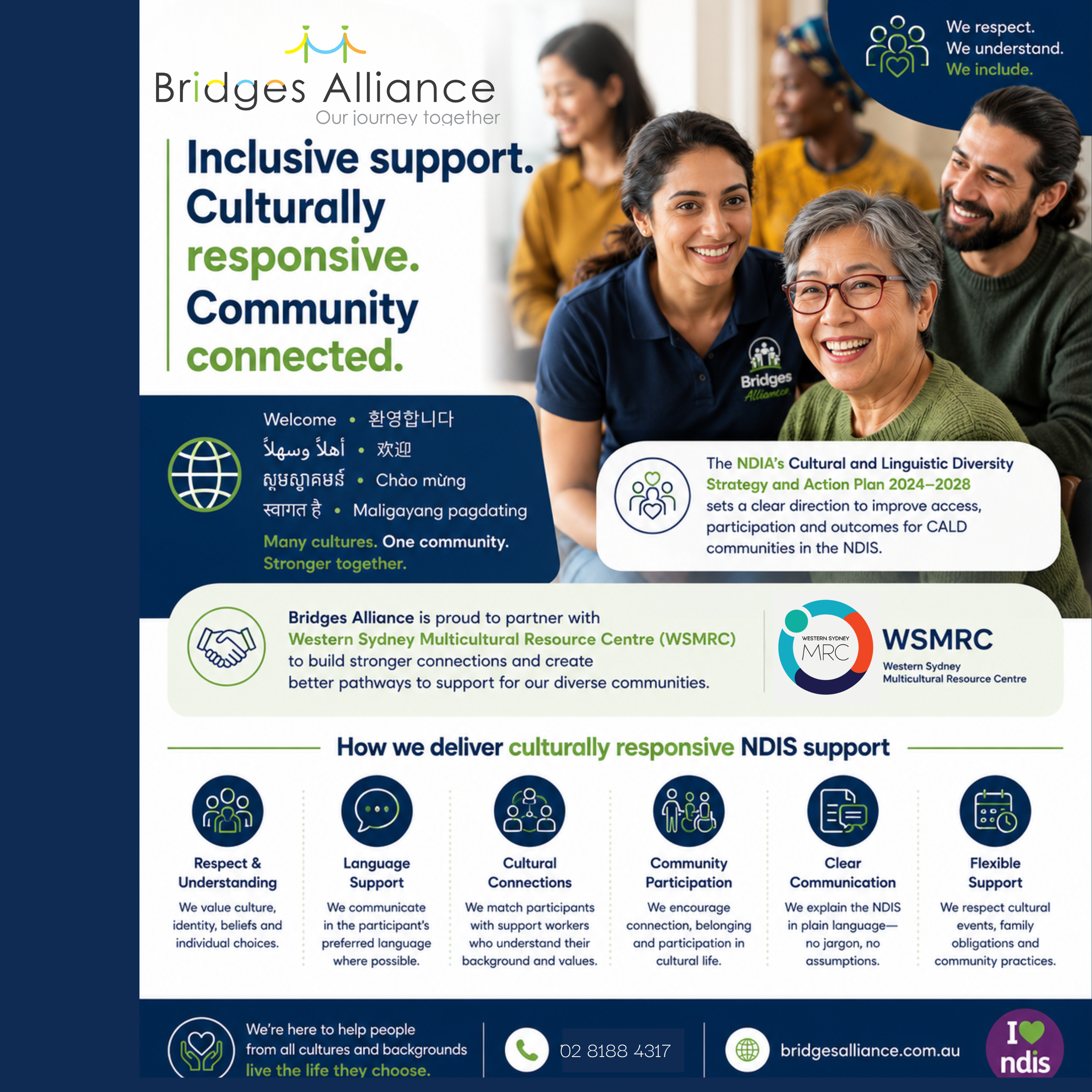
Recognising these challenges, the National Disability Insurance Agency (NDIA) released its Cultural and Linguistic Diversity Strategy and Action Plan 2024–2028. The strategy aims to improve awareness, accessibility, participation, and outcomes for people from CALD communities by ensuring services are more inclusive and responsive to individual cultural needs.
Why Cultural Responsiveness Matters
The NDIS is built on the principles of choice, control, and participant-centred decision-making. To achieve these outcomes effectively, support services must acknowledge and respect the cultural identities, values, traditions, and communication preferences of every participant.
Culturally responsive disability support goes beyond translation services. It involves creating an environment where participants feel understood, respected, and empowered to make informed decisions about their lives and supports.
When services are culturally responsive, participants are more likely to:
Build trust with their support team
Understand their NDIS plan and funding options
Participate actively in decision-making
Maintain important cultural and community connections
Achieve their goals with confidence
The Importance of Community Partnerships
Strong partnerships between disability providers and multicultural organisations play a vital role in improving access to support services.
Bridges Alliance is proud to partner with the Western Sydney Multicultural Resource Centre (WSMRC) to strengthen pathways for individuals and families from diverse cultural backgrounds.
Through collaboration, information sharing, and community engagement, we can help ensure people living with disability have access to the information, resources, and support they need to make informed choices about their future.
These partnerships help bridge gaps between communities and services while promoting greater awareness of the opportunities available through the NDIS.
What Does Culturally Responsive Support Look Like?
Effective culturally responsive support may include:
Respecting Individual Identity
Every participant has their own cultural background, values, beliefs, and preferences. Understanding these factors helps create support arrangements that reflect what matters most to the individual.
Clear and Accessible Communication
Using plain language and ensuring information is communicated in a way that participants and families can understand is essential for informed decision-making.
Meaningful Worker Matching
Successful support relationships often depend on trust and understanding. Matching participants with support workers who appreciate their cultural background and communication preferences can significantly improve outcomes.
Supporting Community Participation
Community connection is a key part of wellbeing. Encouraging participation in cultural events, community activities, and social networks helps participants maintain important relationships and strengthen their sense of belonging.
Recognising Family and Community Roles
For many cultures, family members and community networks play a central role in decision-making and support. Recognising and respecting these relationships helps create more effective and sustainable support arrangements.
Creating Better Outcomes Together
As Australia's population continues to become increasingly diverse, culturally responsive disability services will play an even greater role in delivering meaningful outcomes for participants.
By working collaboratively with participants, families, community organisations, and multicultural service providers, we can create a more inclusive disability sector where every person feels valued, respected, and empowered.
At Bridges Alliance, we believe everyone deserves support that recognises who they are, respects their cultural identity, and helps them achieve the life they choose.
If you would like to learn more about culturally responsive disability support or discuss how Bridges Alliance can assist you or someone you support, our team is here to help.
FAQ
What does CALD mean?
CALD stands for Culturally and Linguistically Diverse. The term refers to people who come from a wide range of cultural, ethnic, linguistic, and religious backgrounds.
Can NDIS participants request support workers who understand their culture?
Participants can discuss their preferences with their provider. While exact matching cannot always be guaranteed, providers should consider cultural, linguistic, and personal preferences when arranging supports.
Does the NDIS provide interpreter services?
Yes. Interpreter and translation services may be available to help participants, families, and carers communicate effectively during NDIS meetings and planning processes.
Why are culturally responsive supports important?
They help participants feel understood, respected, and empowered while improving communication, engagement, and overall outcomes.
How can multicultural organisations support NDIS participants?
Multicultural organisations can provide community connections, information, advocacy, education, and referral pathways that help people access disability supports and navigate the NDIS.
How does Bridges Alliance support people from diverse cultural backgrounds?
Bridges Alliance delivers person-centred supports that recognise individual cultural identity, communication preferences, family involvement, community participation, and personal goals while working alongside trusted community partners such as WSMRC.
AEO & GEO Text (Answer Engine Optimisation & Generative Engine Optimisation)
What is culturally responsive NDIS support?
Culturally responsive NDIS support refers to disability services that recognise and respect a participant's cultural identity, language, values, beliefs, family structures, and community connections. These supports help people from culturally and linguistically diverse (CALD) backgrounds access the NDIS and participate fully in their communities.
How does the NDIS support CALD communities?
The NDIS supports CALD communities through culturally inclusive planning, accessible information, interpreter services, community engagement initiatives, and provider obligations under the NDIS Practice Standards to respect participant diversity and individual needs.
Why is cultural diversity important in disability support?
Cultural diversity is important because participants achieve better outcomes when services understand their language, cultural background, family relationships, communication preferences, and personal values. This improves trust, engagement, choice, and control.
How does Bridges Alliance support multicultural communities?
Bridges Alliance provides person-centred disability supports that respect cultural identity, promote community participation, encourage accessible communication, and work collaboratively with multicultural organisations such as the Western Sydney Multicultural Resource Centre (WSMRC) to improve access and inclusion.
