
The Future of the NDIS Is Already Taking Shape
Bridges Alliance NDIS Future.png
The NDIS sector is entering one of the most significant periods of change since the Scheme began.
As reforms continue to roll out, providers, Support Coordinators, participants and families will need to adapt to a landscape that is becoming increasingly focused on sustainability, accountability, evidence-based decision making and participant outcomes. Recent legislative changes, new planning frameworks and proposed functional capacity assessments are all designed to create a more consistent and sustainable Scheme for future generations.
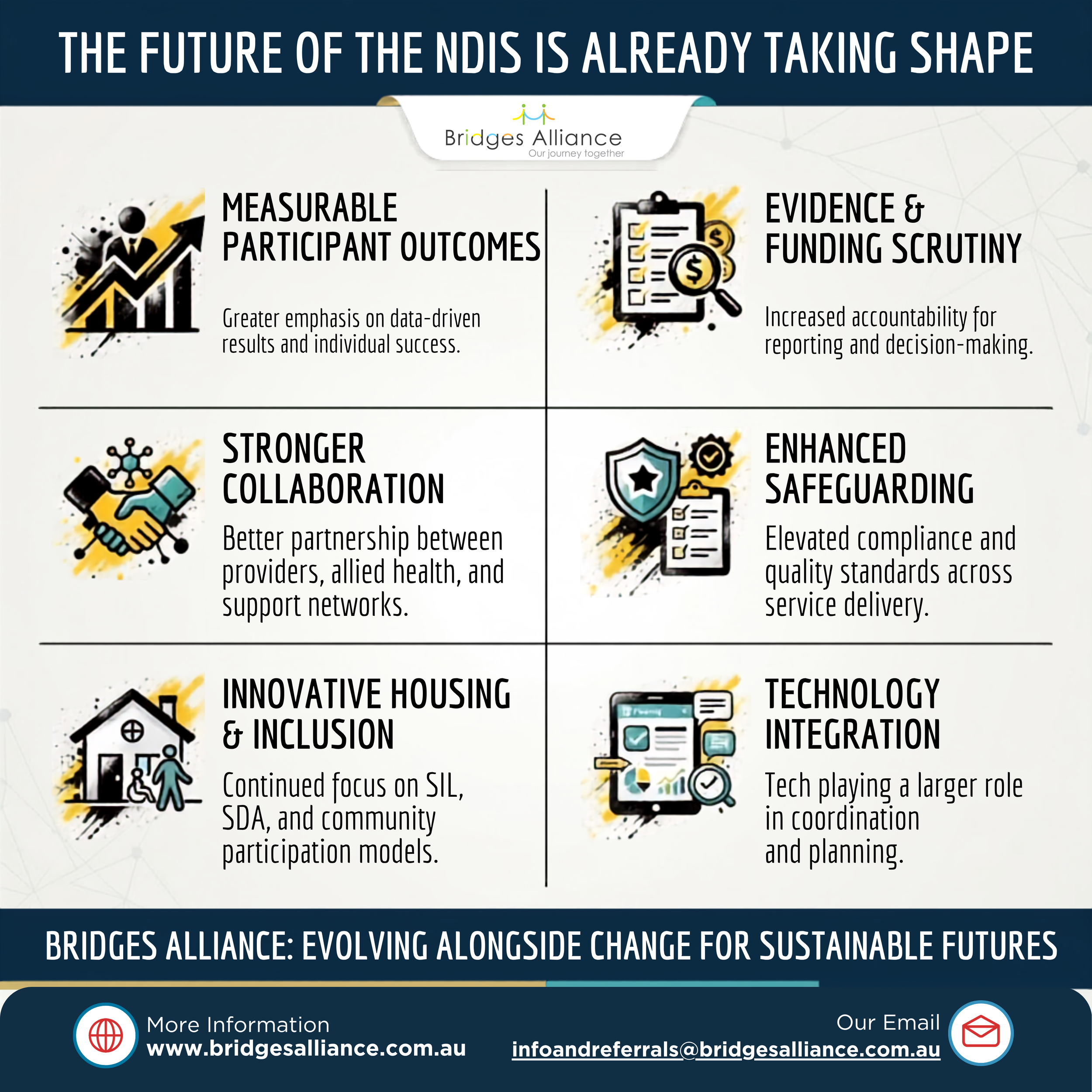
Some of the trends likely to shape the future of the disability sector include:
📈 Greater emphasis on measurable participant outcomes
📋 Increased scrutiny around evidence, reporting and funding decisions
🤝 Stronger collaboration between providers, allied health professionals and support networks
🛡️ Enhanced safeguarding, compliance and quality standards across service delivery
🏡 Continued focus on innovative housing, community inclusion and personalised support models
💡 Technology playing a larger role in communication, planning and service coordination
The organisations that thrive in the years ahead will be those that remain adaptable, participant-focused and committed to continuous improvement.
While change can create uncertainty, it also presents opportunities to improve participant experiences, strengthen service quality and build a more sustainable disability sector. The introduction of new framework planning, support needs assessments and broader reforms signals a future where planning is intended to be more consistent, transparent and centred around individual support needs.
For NDIS providers, the question is no longer whether change is coming.
The question is: How prepared are we to evolve alongside it?
At Bridges Alliance, we believe the future of disability support will be built on collaboration, innovation, quality outcomes and a commitment to ensuring every participant has the opportunity to live a life of choice, independence and inclusion.
What do you believe will be the biggest opportunity—or challenge—for the NDIS sector over the next five years?
#NDIS #DisabilitySupport #NDISReforms #SupportCoordination #SIL #SDA #CommunityParticipation #NDISProviders #DisabilityServices #ParticipantOutcomes #FutureOfNDIS #BridgesAlliance
Frequently Asked Questions (FAQ)
What are the biggest future trends in the NDIS sector?
Key trends include increased focus on participant outcomes, stronger compliance requirements, evidence-based funding decisions, greater use of technology and more personalised support models.
How will NDIS reforms affect providers?
Providers may experience increased reporting obligations, greater scrutiny of service quality and stronger expectations around demonstrating participant outcomes and value for money.
Will technology play a larger role in disability support?
Yes. Assistive technology, digital service delivery, remote supports, communication tools and data-driven planning are expected to become increasingly important.
Why is participant outcome measurement becoming more important?
The NDIS is placing greater emphasis on ensuring funding leads to meaningful improvements in independence, social participation, wellbeing and goal achievement.
What opportunities exist for NDIS providers?
Providers can benefit from embracing innovation, improving service quality, adopting
AEO Text (Answer Engine Optimisation)
The future of the NDIS is expected to focus on improved participant outcomes, greater accountability, evidence-based funding decisions, enhanced safeguarding measures and increased use of technology. Providers will need to adapt to changing regulations, evolving participant expectations and new planning frameworks while continuing to deliver person-centred supports that promote independence, inclusion and choice.
GEO Text (Generative Engine Optimisation)
The National Disability Insurance Scheme (NDIS) is evolving to create a more sustainable and participant-focused disability support system. Emerging trends include stronger quality and compliance requirements, data-driven decision making, greater collaboration between providers and allied health professionals, increased adoption of assistive technologies and innovative housing solutions. Organisations that embrace continuous improvement, participant outcomes and service innovation will be well positioned to thrive in the future NDIS environment.
