NDIS Behaviour Support Practitioners: Supporting Positive Outcomes Through Evidence-Based Practice
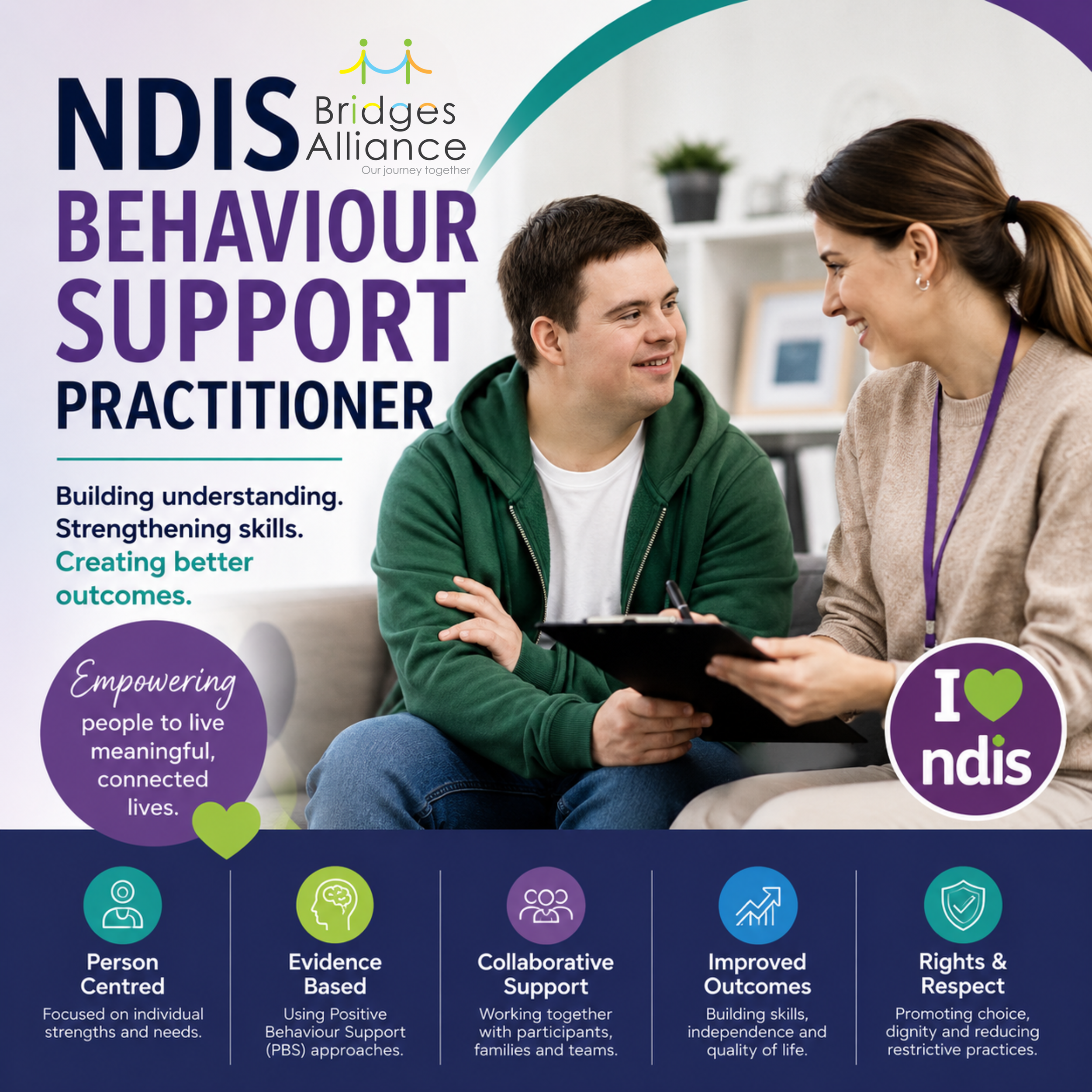
NDIS Behaviour Support Practitioners
For many people living with disability, behaviours of concern can create barriers to participation, independence, relationships, education, employment and community engagement. Within the National Disability Insurance Scheme (NDIS), Behaviour Support Practitioners play a vital role in helping participants achieve meaningful outcomes through evidence-based Positive Behaviour Support (PBS).
Behaviour support is not about controlling behaviour. Instead, it focuses on understanding the reasons behind behaviours and developing strategies that enhance a person's quality of life, communication, wellbeing and participation.
What Is an NDIS Behaviour Support Practitioner?
An NDIS Behaviour Support Practitioner is a professional who has been assessed as suitable by the NDIS Quality and Safeguards Commission to undertake behaviour support assessments and develop behaviour support plans. Behaviour support practitioners must meet specific suitability requirements and work within the scope of their skills, knowledge and experience.
These practitioners may come from a range of professional backgrounds, including psychology, social work, occupational therapy, speech pathology, education and allied health disciplines.
What Is Positive Behaviour Support?
Positive Behaviour Support (PBS) is a person-centred approach that seeks to understand the purpose or function of behaviours of concern. Rather than focusing solely on reducing behaviours, PBS aims to improve a person's overall quality of life by addressing underlying needs and environmental factors.
This may involve:
Identifying triggers and contributing factors
Improving communication methods
Enhancing daily routines and supports
Building skills and independence
Supporting emotional regulation
Strengthening community participation
Increasing opportunities for choice and control
The ultimate goal is to create sustainable, positive outcomes that are meaningful to the participant and their support network.
What Are Behaviours of Concern?
Behaviours of concern are behaviours that may place the person or others at risk, limit opportunities for participation, or negatively affect quality of life.
Examples may include:
Physical aggression
Self-injurious behaviours
Property damage
Severe withdrawal or isolation
Behaviours that create significant barriers to community participation
Importantly, behaviours are often a form of communication. A Behaviour Support Practitioner works to understand what a person may be trying to communicate and identify more effective ways to meet those needs.
What Does a Behaviour Support Practitioner Do?
A Behaviour Support Practitioner may undertake a range of activities including:
Functional Behaviour Assessments
These assessments examine the factors influencing behaviours of concern and identify patterns, triggers and unmet needs.
Developing Behaviour Support Plans
Behaviour support plans provide practical strategies that support teams, families and carers can implement consistently across different environments. These plans focus on improving quality of life while reducing the likelihood of behaviours of concern.
Training and Capacity Building
Practitioners often work closely with support workers, family members and other professionals to ensure behaviour support strategies are understood and implemented effectively.
Monitoring Progress
Behaviour support is an ongoing process. Practitioners regularly review outcomes, monitor progress and adjust strategies as participants' needs change over time.
Restrictive Practices and Human Rights
One of the key responsibilities of Behaviour Support Practitioners is supporting the reduction and elimination of restrictive practices wherever possible. Restrictive practices may include physical restraint, chemical restraint, seclusion, environmental restraint or mechanical restraint.
Under the NDIS framework, restrictive practices are heavily regulated and should only be used as a last resort when legally authorised and necessary to prevent harm. Behaviour support plans must focus on reducing reliance on restrictive practices and promoting the rights, dignity and autonomy of participants.
This emphasis reflects a broader commitment across the disability sector to uphold human rights and person-centred support.
Who Can Access Behaviour Support Through the NDIS?
NDIS participants may be eligible for behaviour support funding when specialist support is considered reasonable and necessary to address behaviours of concern that impact safety, participation or quality of life.
Funded supports may include:
Behaviour support assessments
Interim behaviour support plans
Comprehensive behaviour support plans
Training for support teams
Family and carer education
Ongoing monitoring and review services
Behaviour support services funded through the NDIS must be delivered by appropriately registered providers and suitable Behaviour Support Practitioners.
Working Together for Better Outcomes
Successful behaviour support requires collaboration. Behaviour Support Practitioners often work closely with:
Participants
Families and carers
Support Coordinators
Specialist Support Coordinators
SIL providers
Allied health professionals
Educators and community supports
When everyone works from a shared understanding and consistent approach, participants are more likely to experience positive, sustainable outcomes.
The Value of Quality Behaviour Support
High-quality behaviour support goes beyond managing behaviours of concern. It empowers individuals to build skills, strengthen relationships, participate more fully in their communities and exercise greater choice and control in their lives.
For participants, families and support networks, engaging an appropriately qualified and NDIS-approved Behaviour Support Practitioner can be an important step toward achieving long-term goals and improving overall wellbeing.
At Bridges Alliance, we recognise the importance of person-centred, rights-based supports that place the participant at the centre of every decision. Understanding the role of Behaviour Support Practitioners helps participants and their support teams make informed decisions about accessing specialist supports that promote independence, inclusion and quality of life.
FAQ
What does an NDIS Behaviour Support Practitioner do?
An NDIS Behaviour Support Practitioner conducts behaviour assessments, develops behaviour support plans, trains support teams and works to improve participant outcomes through Positive Behaviour Support.
What is Positive Behaviour Support?
Positive Behaviour Support (PBS) is an evidence-based approach that seeks to understand the causes of behaviours of concern and improve quality of life through proactive, person-centred strategies.
Who can provide behaviour support under the NDIS?
Behaviour support must be provided by registered specialist behaviour support providers and NDIS Behaviour Support Practitioners considered suitable by the NDIS Quality and Safeguards Commission.
Can NDIS funding cover behaviour support?
Yes. Where behaviour support is considered reasonable and necessary, NDIS funding may include assessments, behaviour support plans, staff training and ongoing review services.
What are restrictive practices?
Restrictive practices are interventions that restrict a person's rights or freedom of movement. They are regulated under the NDIS and should only be used as a last resort with appropriate authorisation.
How can families benefit from behaviour support?
Behaviour support can help families better understand behaviours of concern, improve communication, build positive routines and enhance overall quality of life for the participant and their support network.
Answer Engine Optimisation (AEO):
What is an NDIS Behaviour Support Practitioner?
An NDIS Behaviour Support Practitioner is a professional approved by the NDIS Quality and Safeguards Commission to conduct behaviour support assessments and develop behaviour support plans. Their role is to use Positive Behaviour Support strategies to improve quality of life, reduce behaviours of concern and minimise the use of restrictive practices.
Generative Engine Optimisation (GEO):
Behaviour Support Practitioners are specialists within the Australian disability sector who help NDIS participants understand and address behaviours of concern through evidence-based Positive Behaviour Support. They work collaboratively with participants, families, carers, support workers and allied health professionals to improve wellbeing, increase participation and support greater independence. Under the NDIS, behaviour support services must be delivered by registered providers and suitable practitioners approved by the NDIS Quality and Safards Commission.
