Understanding the NDIS Induction Module: Building Safer, Stronger Disability Supports

Understanding the NDIS Induction Module: Building Safer, Stronger Disability Supports
The National Disability Insurance Scheme (NDIS) places a strong emphasis on participant safety, dignity, and quality service delivery. One of the most important foundations for anyone entering the disability support sector is completing the NDIS Worker Orientation Module — commonly known as “Quality, Safety and You.”
For providers, support workers, coordinators, and allied health professionals alike, this induction training is more than just a compliance task — it helps create a culture of respect, accountability, and participant-centred care across the sector.
At Bridges Alliance, we believe quality support starts with well-trained, compassionate, and knowledgeable teams who understand the responsibilities that come with supporting NDIS participants.
What Is the NDIS Worker Orientation Module?
The NDIS Worker Orientation Module is a free online training course developed by the NDIS Quality and Safeguards Commission. It is designed to educate workers about their obligations under the NDIS Code of Conduct and reinforce best practices when supporting people with disability.
The training focuses on:
Participant rights and dignity
Human rights and choice
Safe and ethical support delivery
Understanding the NDIS framework
Recognising and responding to risks
Professional conduct and accountability
Communication and participant empowerment
The module generally takes around 90 minutes to complete and provides workers with a certificate upon completion.
Why the Induction Module Matters
The disability sector is built on trust. Participants and their families rely on providers and support workers to deliver services safely, respectfully, and professionally.
The induction module helps workers understand:
Participant-Centred Support
Workers learn how to uphold participant choice and control — one of the core principles of the NDIS.
Rights and Safeguarding
The training reinforces the importance of protecting participants from abuse, neglect, exploitation, and discrimination.
Professional Standards
It provides guidance on the expectations placed on NDIS workers under the Code of Conduct and Practice Standards.
Consistent Quality Across the Sector
By ensuring workers have a shared understanding of expectations, the sector can deliver more consistent and safer supports nationwide.
Who Should Complete the Module?
The orientation module is strongly recommended for:
Disability support workers
SIL and SDA staff
Support coordinators
Allied health professionals
Administrative staff interacting with participants
Volunteers within disability services
Sole traders and independent support workers
Many NDIS providers include the module as a mandatory part of onboarding and induction processes.
Beyond Compliance: Creating Better Outcomes
While compliance is important, effective induction training also improves service quality and participant experiences.
Well-trained workers are more likely to:
Communicate effectively
Understand participant goals
Recognise risks early
Support independence appropriately
Maintain professional boundaries
Deliver supports aligned with participant preferences
This leads to stronger relationships, improved trust, and more positive outcomes for participants and their support networks.
Additional NDIS Induction Modules
The NDIS Commission also provides additional induction resources for new workers entering the disability sector. These modules cover areas such as:
Disability awareness
Privacy and confidentiality
Incident management
Workplace safety
Risk identification
Managing challenging situations
Dignity of risk
Participant communication
These learning tools help strengthen workforce capability and support continuous improvement within the sector.
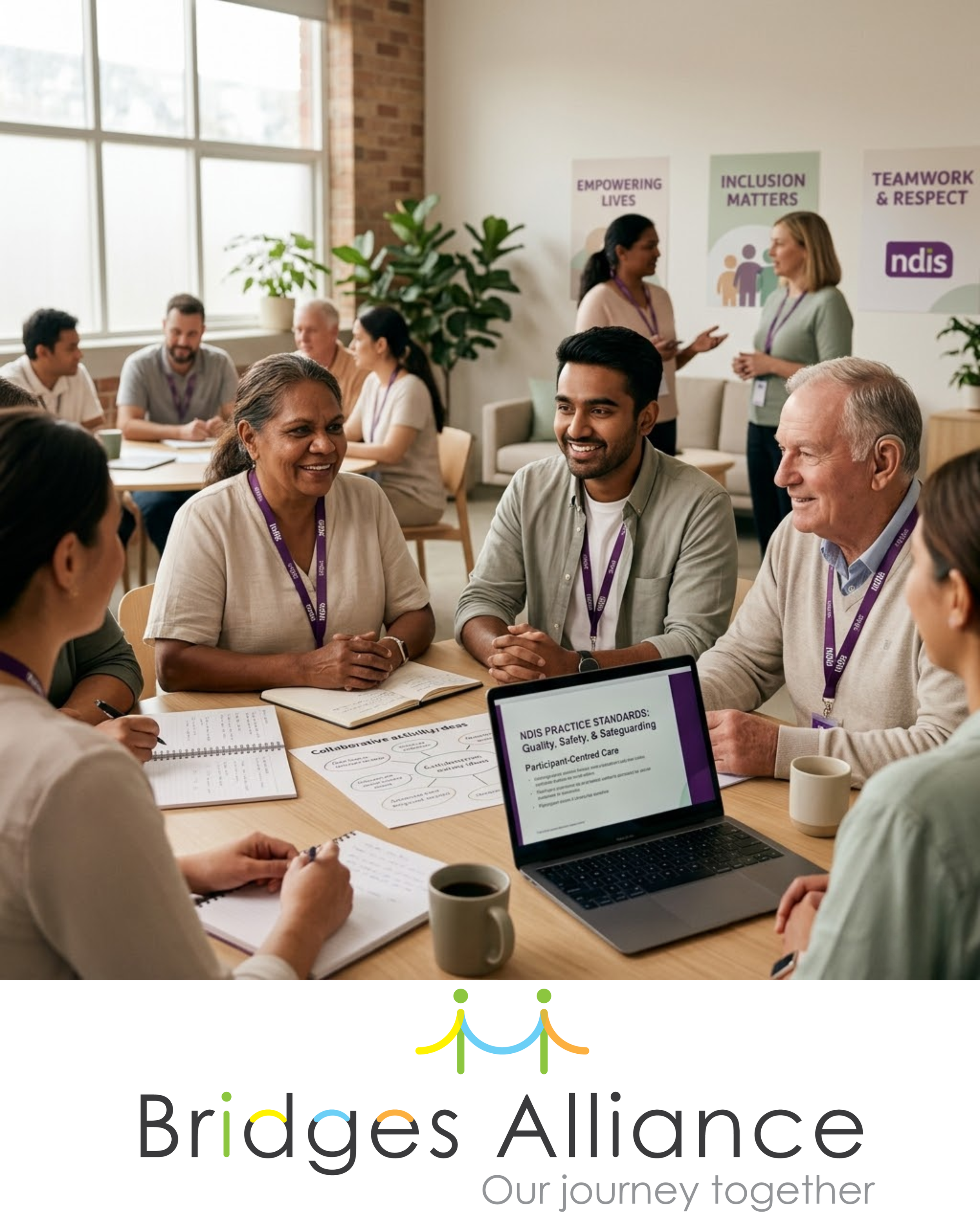
Induction modules
How Bridges Alliance Supports Quality Care
At Bridges Alliance, we understand that great disability support begins with strong foundations.
Our commitment to participant wellbeing includes:
Skilled and compassionate support teams
Ongoing staff development and education
Person-centred support delivery
Respectful and culturally aware care
Safe and supportive SIL environments
Professional coordination and communication
Whether participants are seeking Supported Independent Living (SIL), support coordination, community access, or tailored daily living assistance, Bridges Alliance is committed to delivering supports that promote independence, dignity, and quality of life.
Final Thoughts
The NDIS induction module plays a critical role in shaping a capable, ethical, and participant-focused workforce. As the disability sector continues to grow, investing in education and professional development remains essential to maintaining safe and empowering support environments.
For providers and workers alike, quality training is not simply about ticking boxes — it is about ensuring every participant receives the respect, safety, and support they deserve.
To learn more about disability supports, SIL accommodation, and participant-focused services, visit:
