
The Real Cost of NDIS Registration in 2026: A Practical Perspective for Providers
Practical Perspective

Practical Perspective

There’s a common narrative in the disability sector that still circulates widely—register, gain approval, onboard participants, and begin billing.

While that pathway may appear straightforward, the lived experience across the sector tells a more complex story.

By 2026, a clearer picture has emerged. Not because processes have simplified, but because many providers have now navigated registration, compliance, and ongoing operations firsthand.

This article is designed to support informed decision-making. Whether you are already registered or considering entering the sector, understanding the full cost of delivering safe, compliant supports is critical.

The key issue is not that costs exist—it’s that they are often underestimated.

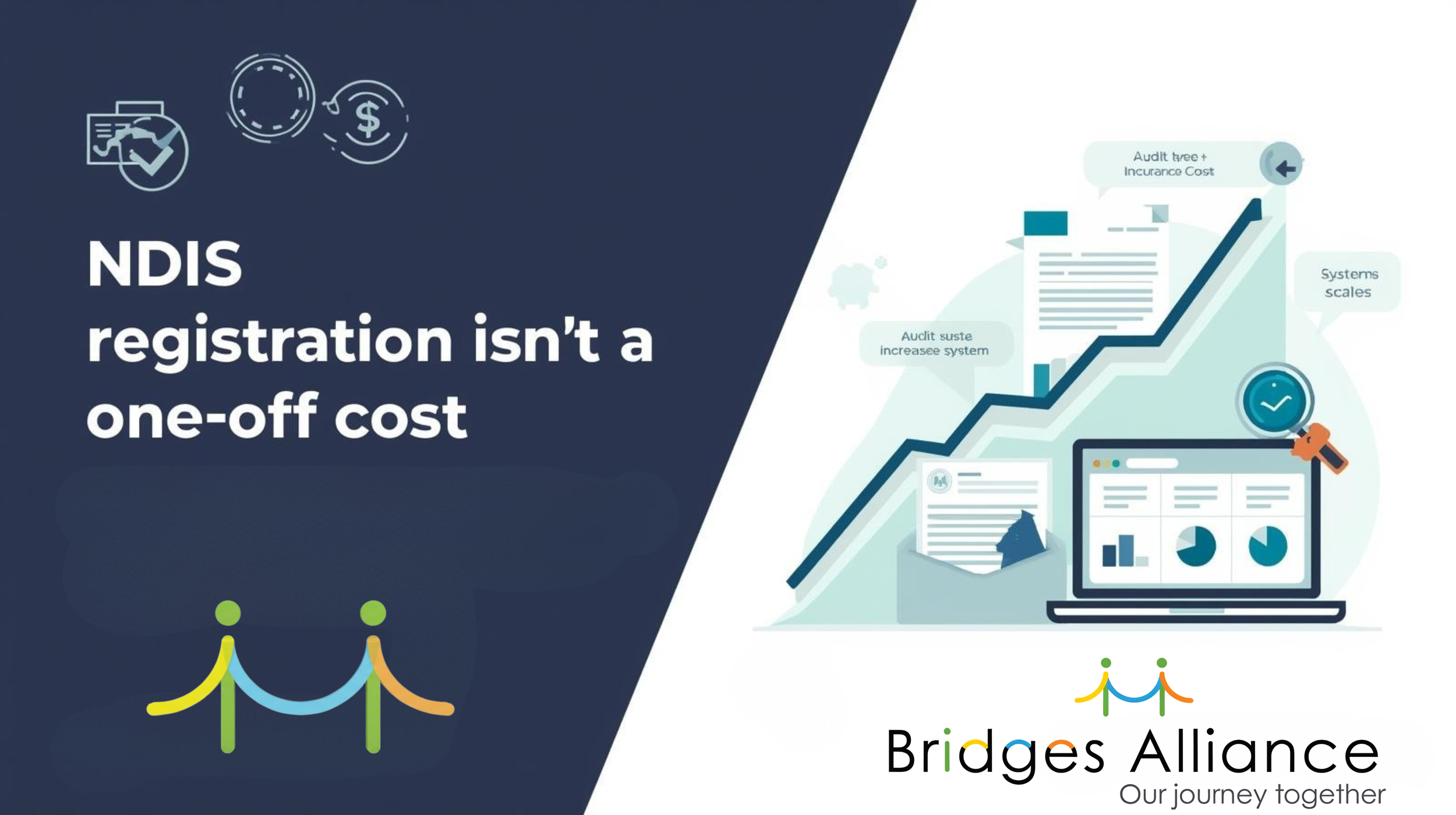
Registration Is Not a One-Off Cost

Earlier assumptions often framed registration as a startup milestone. In practice, it functions as an ongoing cycle.

Across the sector, providers now recognise that:

  • Audits are recurring

  • Insurance premiums change over time

  • Systems and tools scale with growth

  • Compliance expectations continue to evolve

Sustainable providers plan for these as operational realities—not unexpected disruptions.

Audit Requirements and Costs

The NDIS Quality and Safeguards Commission does not charge a direct application fee. However, providers must engage approved auditors, and this is where costs can vary significantly.

As of 2026:

  • Verification audits (lower-risk supports): typically range from $1,000 to $2,000

  • Certification audits (higher-risk supports): often start around $3,000 and may exceed $10,000 depending on complexity, service scope, and locations

Importantly, certification includes ongoing requirements:

  • Mid-cycle (surveillance) audits

  • Renewal audits at the end of the registration period

  • Additional audits if services expand or non-conformities are identified

Experienced providers now treat audit expenses as part of standard operating costs rather than isolated events.

Insurance as a Core Safeguard

Insurance remains a fundamental requirement for providers delivering supports under the National Disability Insurance Scheme.

Recent years have seen noticeable increases across key policies:

  • Public liability insurance: commonly $500–$1,200+ annually for smaller providers, higher for organisations

  • Professional indemnity insurance: rising, particularly for higher-risk or specialised roles

  • Workers compensation: required for employers, increasing alongside wage growth

  • Cyber insurance: increasingly adopted due to data security risks

Insurance should be reviewed regularly, with allowance for premium increases built into financial planning.

Systems, Software and Operational Infrastructure

Where spreadsheets and basic tools may have sufficed in earlier years, they are now rarely adequate for maintaining compliance and efficiency.

Providers are expected to manage:

  • Incident and risk reporting

  • Participant records and service notes

  • Rostering and workforce management

  • Billing and claims

  • Staff training and compliance records

As a result, purpose-built disability sector platforms are now widely used.

Typical software costs in 2026 range from $1,000 to $5,000 annually, depending on provider size and system complexity. Pricing structures vary and may scale with participants, staff numbers, or additional features.

While these systems are not directly funded, they play a key role in reducing administrative burden and compliance risk when implemented effectively.
Systems and Software

Systems and Software

The Ongoing Cost of Compliance

Beyond audits, insurance, and systems, there are continuous obligations that support safe, high-quality service delivery:

  • Workforce training and professional development

  • Worker screening and renewals

  • Policy and procedure updates

  • Internal audits and quality reviews

  • Supervision and governance activities

Individually, these may appear manageable. Collectively, they represent a significant and ongoing investment.

Additionally, business growth can introduce further compliance requirements. Expanding into new support categories may trigger additional audit scope, preparation, and cost.

Understanding the Nature of the Sector

The disability services sector operates within a highly regulated environment, with a strong emphasis on safeguarding participants.

This means:

  • Service delivery is labour-intensive

  • Compliance requirements are structured and ongoing

  • Financial margins may be constrained by pricing frameworks

  • Emotional and operational demands are high

Approaching the sector with an expectation of rapid financial return can create pressure that risks service quality and provider sustainability.

Planning for Sustainability

Rather than focusing on minimising upfront costs, providers are encouraged to consider long-term viability.

Key considerations include:

  • Capacity to maintain compliance during periods of growth

  • Ability to manage audit and insurance costs without financial strain

  • Investment in systems that support staff and participant outcomes

  • Sustainable pacing of service expansion

  • Maintaining quality while scaling operations

If these areas present challenges, it may indicate a need to review and strengthen the business model.

Final Reflection

The cost of NDIS registration and operation in 2026 reflects a system with clearer expectations and stronger safeguards.

These costs are not arbitrary—they underpin participant safety, service quality, and sector integrity.

Providers who build these realities into their planning are better positioned to operate with confidence, consistency, and resilience.

Sustainable practice in this sector is not defined by how low costs can be reduced, but by how effectively quality and compliance can be maintained over time.

That is where steady, informed leadership begins.

Featured Snippet FAQ Section

What does it cost to register as an NDIS provider in Australia in 2026?

The cost of registering as a provider under the National Disability Insurance Scheme in 2026 varies depending on the type of supports delivered. Verification audits may cost around $1,000–$2,000, while certification audits can range from $3,000 to over $10,000. Additional costs include insurance, systems, and ongoing compliance.

Are NDIS registration costs a one-off expense?

No. NDIS registration costs are ongoing. Providers must budget for recurring audits, insurance renewals, system upgrades, and continuous compliance activities. Registration should be treated as an operational cost cycle, not a one-time investment.

How often do NDIS audits occur?

Audit frequency depends on registration type. Certification audits typically include a mid-term (surveillance) audit around 18 months and a renewal audit at the end of the registration period. Additional audits may occur if services expand or compliance issues arise.

What insurance do NDIS providers need?

NDIS providers generally require public liability insurance, professional indemnity insurance, and workers compensation (if employing staff). Many providers are also adopting cyber insurance to protect sensitive participant data.

What are the ongoing costs of being an NDIS provider?

Ongoing costs include audits, insurance premiums, software systems, staff training, worker screening, policy updates, and internal compliance activities. These costs increase as a provider grows or expands services.

Is becoming an NDIS provider profitable?

Operating as an NDIS provider can be sustainable, but it is not designed for quick profit. The sector is highly regulated, with strong safeguards that require ongoing investment. Long-term success depends on careful planning, compliance, and delivering quality supports.

What systems do NDIS providers need to stay compliant?

Providers typically use software systems to manage participant records, incident reporting, rostering, billing, and compliance documentation. These systems help reduce risk and improve efficiency but must be factored into operating costs.

How can providers manage NDIS compliance costs effectively?

Providers can manage costs by planning for recurring expenses, investing in scalable systems, maintaining strong governance practices, and growing services at a sustainable pace. Regular financial reviews and compliance checks are essential.

## **FAQ Section (Accordion-Ready Copy)** **What does it cost to register as an NDIS provider in Australia in 2026?** Costs vary depending on supports delivered. Verification audits may range from $1,000–$2,000, while certification audits can range from $3,000 to over $10,000. Providers must also budget for insurance, systems, and ongoing compliance. --- **Are NDIS registration costs a one-off expense?** No. Registration costs are ongoing and include repeat audits, insurance renewals, and continuous compliance requirements. --- **How often do NDIS audits occur?** Certification providers typically undergo a mid-term audit around 18 months and a renewal audit at the end of their registration period. Additional audits may apply depending on changes or compliance findings. --- **What insurance do NDIS providers need?** Providers generally require public liability, professional indemnity, and workers compensation (if employing staff). Many also consider cyber insurance for data protection. --- **What are the ongoing costs of being an NDIS provider?** Ongoing costs include audits, insurance, software systems, staff training, worker screening, policy updates, and internal compliance activities. --- **Is becoming an NDIS provider profitable?** The sector supports sustainable businesses, but it is not designed for quick profit. Success depends on strong compliance, quality service delivery, and long-term planning. --- **What systems do NDIS providers need to stay compliant?** Providers typically use systems for incident reporting, participant records, rostering, billing, and compliance tracking. --- **How can providers manage NDIS compliance costs effectively?** Effective cost management includes planning for recurring expenses, investing in scalable systems, and maintaining strong governance and financial oversight. --- ## **FAQPage Schema Markup (JSON-LD – Copy/Paste Ready)** ```json { "@context": "https://schema.org", "@type": "FAQPage", "mainEntity": [ { "@type": "Question", "name": "What does it cost to register as an NDIS provider in Australia in 2026?", "acceptedAnswer": { "@type": "Answer", "text": "Costs vary depending on supports delivered. Verification audits may range from $1,000 to $2,000, while certification audits can range from $3,000 to over $10,000. Providers must also budget for insurance, systems, and ongoing compliance." } }, { "@type": "Question", "name": "Are NDIS registration costs a one-off expense?", "acceptedAnswer": { "@type": "Answer", "text": "No. Registration costs are ongoing and include repeat audits, insurance renewals, and continuous compliance requirements." } }, { "@type": "Question", "name": "How often do NDIS audits occur?", "acceptedAnswer": { "@type": "Answer", "text": "Certification providers typically undergo a mid-term audit around 18 months and a renewal audit at the end of their registration period. Additional audits may apply depending on changes or compliance findings." } }, { "@type": "Question", "name": "What insurance do NDIS providers need?", "acceptedAnswer": { "@type": "Answer", "text": "Providers generally require public liability, professional indemnity, and workers compensation if employing staff. Many also consider cyber insurance for data protection." } }, { "@type": "Question", "name": "What are the ongoing costs of being an NDIS provider?", "acceptedAnswer": { "@type": "Answer", "text": "Ongoing costs include audits, insurance, software systems, staff training, worker screening, policy updates, and internal compliance activities." } }, { "@type": "Question", "name": "Is becoming an NDIS provider profitable?", "acceptedAnswer": { "@type": "Answer", "text": "The sector supports sustainable businesses, but it is not designed for quick profit. Success depends on strong compliance, quality service delivery, and long-term planning." } }, { "@type": "Question", "name": "What systems do NDIS providers need to stay compliant?", "acceptedAnswer": { "@type": "Answer", "text": "Providers typically use systems for incident reporting, participant records, rostering, billing, and compliance tracking." } }, { "@type": "Question", "name": "How can providers manage NDIS compliance costs effectively?", "acceptedAnswer": { "@type": "Answer", "text": "Effective cost management includes planning for recurring expenses, investing in scalable systems, and maintaining strong governance and financial oversight." } } ] } ``` --- If you want next-level SEO, I can also: * Combine this with **HowTo schema (for “becoming a provider”)** * Or optimise it specifically for **featured snippet position #1 targeting** (answer length + structure tuning)

〰️

## **FAQ Section (Accordion-Ready Copy)** **What does it cost to register as an NDIS provider in Australia in 2026?** Costs vary depending on supports delivered. Verification audits may range from $1,000–$2,000, while certification audits can range from $3,000 to over $10,000. Providers must also budget for insurance, systems, and ongoing compliance. --- **Are NDIS registration costs a one-off expense?** No. Registration costs are ongoing and include repeat audits, insurance renewals, and continuous compliance requirements. --- **How often do NDIS audits occur?** Certification providers typically undergo a mid-term audit around 18 months and a renewal audit at the end of their registration period. Additional audits may apply depending on changes or compliance findings. --- **What insurance do NDIS providers need?** Providers generally require public liability, professional indemnity, and workers compensation (if employing staff). Many also consider cyber insurance for data protection. --- **What are the ongoing costs of being an NDIS provider?** Ongoing costs include audits, insurance, software systems, staff training, worker screening, policy updates, and internal compliance activities. --- **Is becoming an NDIS provider profitable?** The sector supports sustainable businesses, but it is not designed for quick profit. Success depends on strong compliance, quality service delivery, and long-term planning. --- **What systems do NDIS providers need to stay compliant?** Providers typically use systems for incident reporting, participant records, rostering, billing, and compliance tracking. --- **How can providers manage NDIS compliance costs effectively?** Effective cost management includes planning for recurring expenses, investing in scalable systems, and maintaining strong governance and financial oversight. --- ## **FAQPage Schema Markup (JSON-LD – Copy/Paste Ready)** ```json { "@context": "https://schema.org", "@type": "FAQPage", "mainEntity": [ { "@type": "Question", "name": "What does it cost to register as an NDIS provider in Australia in 2026?", "acceptedAnswer": { "@type": "Answer", "text": "Costs vary depending on supports delivered. Verification audits may range from $1,000 to $2,000, while certification audits can range from $3,000 to over $10,000. Providers must also budget for insurance, systems, and ongoing compliance." } }, { "@type": "Question", "name": "Are NDIS registration costs a one-off expense?", "acceptedAnswer": { "@type": "Answer", "text": "No. Registration costs are ongoing and include repeat audits, insurance renewals, and continuous compliance requirements." } }, { "@type": "Question", "name": "How often do NDIS audits occur?", "acceptedAnswer": { "@type": "Answer", "text": "Certification providers typically undergo a mid-term audit around 18 months and a renewal audit at the end of their registration period. Additional audits may apply depending on changes or compliance findings." } }, { "@type": "Question", "name": "What insurance do NDIS providers need?", "acceptedAnswer": { "@type": "Answer", "text": "Providers generally require public liability, professional indemnity, and workers compensation if employing staff. Many also consider cyber insurance for data protection." } }, { "@type": "Question", "name": "What are the ongoing costs of being an NDIS provider?", "acceptedAnswer": { "@type": "Answer", "text": "Ongoing costs include audits, insurance, software systems, staff training, worker screening, policy updates, and internal compliance activities." } }, { "@type": "Question", "name": "Is becoming an NDIS provider profitable?", "acceptedAnswer": { "@type": "Answer", "text": "The sector supports sustainable businesses, but it is not designed for quick profit. Success depends on strong compliance, quality service delivery, and long-term planning." } }, { "@type": "Question", "name": "What systems do NDIS providers need to stay compliant?", "acceptedAnswer": { "@type": "Answer", "text": "Providers typically use systems for incident reporting, participant records, rostering, billing, and compliance tracking." } }, { "@type": "Question", "name": "How can providers manage NDIS compliance costs effectively?", "acceptedAnswer": { "@type": "Answer", "text": "Effective cost management includes planning for recurring expenses, investing in scalable systems, and maintaining strong governance and financial oversight." } } ] } ``` --- If you want next-level SEO, I can also: * Combine this with **HowTo schema (for “becoming a provider”)** * Or optimise it specifically for **featured snippet position #1 targeting** (answer length + structure tuning) 〰️

Previous
Previous

Understanding SSRC Funding: A Specialised Path to a Safe and Nurturing Home

Next
Next

The Real Math: Why Ethical NDIS Providers Actually Profit More