
What Choice and Control Really Means Under the NDIS
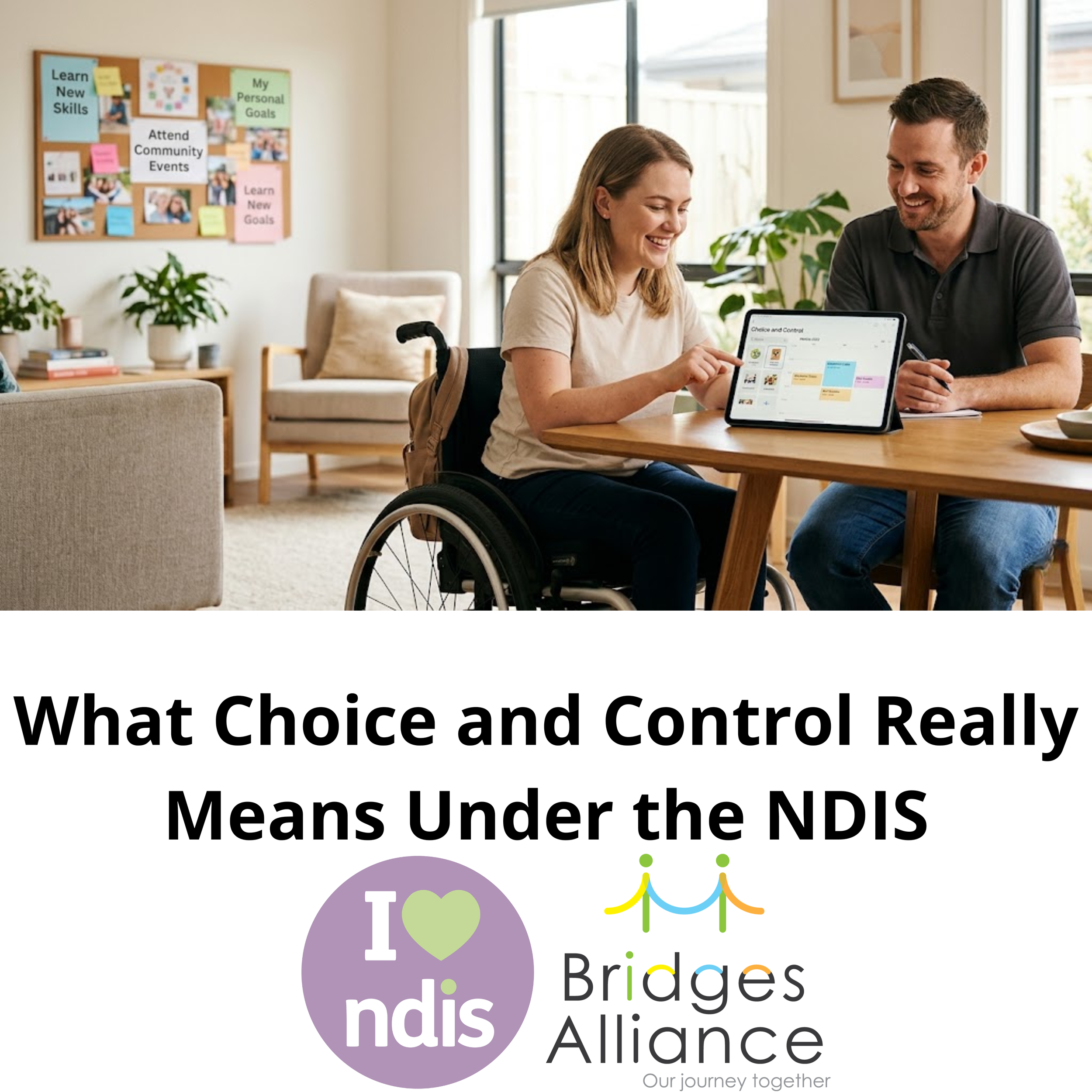
What Choice and Control Really Means Under the NDIS
“Choice and control” is one of the most important principles of the NDIS — but for many participants and families, it can still feel confusing in practice.
At its core, choice and control means having the freedom to make decisions about your own supports and services. It means having a genuine say in who supports you, how those supports are delivered, and what works best for your lifestyle, goals, and individual needs.
Under the NDIS, participants are not expected to simply accept whatever service is available. You have the right to:
Choose your support providers
Decide what supports suit your goals and preferences
Change providers if something is not the right fit
Have supports delivered in a way that respects your independence, dignity, and personal choices
This shift represents a major change from older service models, where support options were often limited and decisions were made for people rather than with them.
Why Choice and Control Matters
The NDIS was designed to place participants at the centre of decision-making. Funding is attached to the individual — not the provider — which means your plan is intended to support your goals, your routine, and your preferred way of living.
When participants have real choice and control, outcomes are often stronger because supports become more personalised, flexible, and responsive.
This is especially important in areas like Supported Independent Living (SIL), community access, daily living supports, and support coordination, where trust and compatibility can make a significant difference to someone’s quality of life.
At Bridges Alliance, we believe support should never feel transactional. It should feel empowering, respectful, and centred around the participant’s voice.
The Challenge Many Participants Face
While choice and control is a fundamental NDIS principle, exercising that choice is not always easy.
Many participants and families report feeling overwhelmed when trying to navigate the system. Finding the right provider can be difficult when information is unclear, availability is limited, or services do not communicate openly about how they operate.
Having options only matters when participants can genuinely explore and compare those options with confidence.
That is why transparency, communication, and relationship-building matter so much within disability services.
How Participants Can Exercise Greater Choice and Control
A good starting point is understanding how your NDIS funding works and what supports are available within your plan.
Participants may wish to:
Ask questions about how supports are delivered
Explore different providers and service models
Discuss goals openly and honestly
Review whether supports are helping achieve positive outcomes
Speak up if something does not feel right
Participants also have the right to change providers if their current supports are no longer meeting their needs.
The most effective support relationships are built on trust, consistency, communication, and genuine collaboration.
A Participant-Focused Approach
At Bridges Alliance, we understand that every participant’s journey is different.
Our team is committed to delivering supports that are person-centred, respectful, and aligned with each individual’s goals and preferences. Whether someone is looking for Supported Independent Living, community participation, or tailored day-to-day support, we believe participants should feel heard, empowered, and involved in every step of the process.
Because real choice and control is not just about having options.
It is about having the confidence, support, and opportunity to make decisions that genuinely improve your quality of life.
AEO & GEO Keywords/Tags:
NDIS choice and control, choice and control explained, person-centred supports, NDIS participant rights, Supported Independent Living Sydney, SIL providers Sydney, disability support services NSW, NDIS support providers, participant-led supports, independent living supports, NDIS services South West Sydney, disability care Australia, Bridges Alliance, NDIS participant empowerment, NDIS support coordination, community participation supports, NDIS registered provider Sydney, flexible disability supports, quality disability services, NDIS goals and planning
