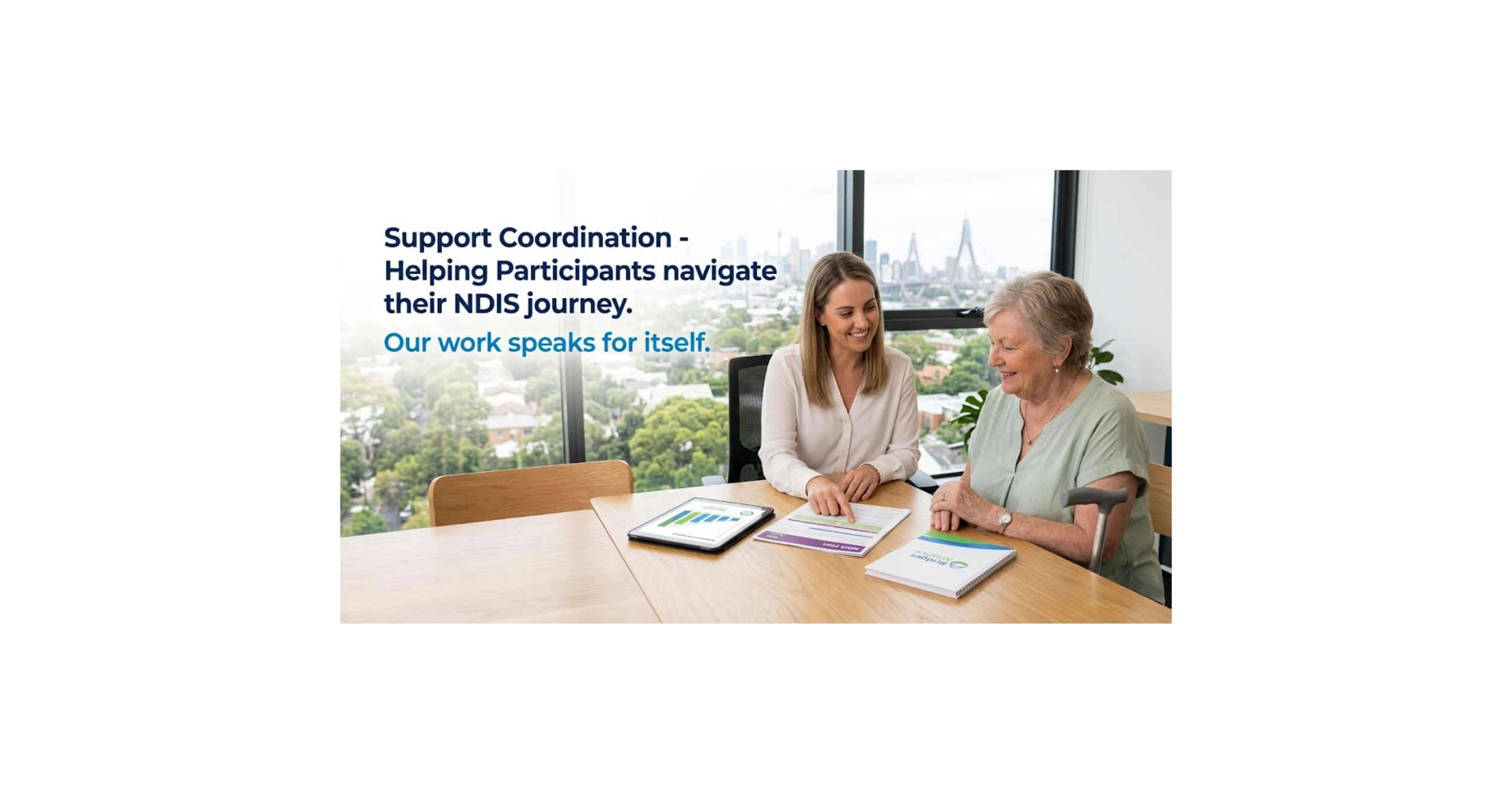
Support Coordination -
Helping Participants navigate their NDIS journey.
Our work speaks for itself
What Does a Support Coordinator Do?
Helping Participants Navigate the NDIS with Confidence
The National Disability Insurance Scheme (NDIS) can provide access to a wide range of supports and services, but understanding how to make the most of an NDIS plan can sometimes feel complex. This is where a Support Coordinator can play an important role.
A Support Coordinator works alongside NDIS participants to help them understand their plan, connect with suitable providers, build their capacity to manage supports, and work towards achieving their goals.
The role is focused on empowering participants to exercise choice and control while ensuring they can access the supports they need to live a fulfilling and independent life.
What Is Support Coordination?
Support Coordination is a capacity-building support funded under the NDIS for participants who require assistance to understand, implement, and maximise the benefits of their NDIS plan.
The primary purpose of Support Coordination is to help participants:
Understand their NDIS plan
Connect with appropriate supports and services
Build skills to manage supports independently
Navigate service systems and community resources
Achieve their NDIS goals
Strengthen informal and community networks
Support Coordination is designed to build participant capacity over time, promoting greater independence and self-management where appropriate.
Key Responsibilities of a Support Coordinator
Understanding the NDIS Plan
One of the first responsibilities of a Support Coordinator is helping participants understand their NDIS funding and how it can be used.
This may include:
Explaining funded supports
Identifying available budgets
Clarifying service categories
Discussing plan goals
Exploring opportunities to maximise plan outcomes
The aim is to ensure participants have a clear understanding of their plan and available supports.
Connecting Participants with Service Providers
Support Coordinators assist participants to identify and engage with providers that align with their needs, preferences, and goals.
This may include:
Supported Independent Living (SIL) providers
Allied health professionals
Support workers
Community participation services
Employment supports
Accommodation providers
Specialist services
Participants maintain the right to choose their providers and make informed decisions about their supports.
Developing a Support Network
Effective support often involves a combination of formal, informal, and community-based supports.
A Support Coordinator may assist participants to:
Strengthen family and informal support networks
Access community groups and activities
Build social connections
Explore mainstream services
Increase community participation
This holistic approach helps create sustainable support systems that extend beyond funded services.
Coordinating Multiple Supports
Many participants engage with several providers and services simultaneously.
A Support Coordinator may assist by:
Facilitating communication between providers
Supporting service agreements
Monitoring service effectiveness
Identifying gaps in support
Encouraging collaborative planning
This coordination can help ensure services work together effectively to support participant goals.
Building Capacity and Independence
An important aspect of Support Coordination is helping participants develop the skills and confidence to manage their supports independently.
This may involve:
Developing decision-making skills
Understanding service options
Learning how to engage providers
Managing appointments and schedules
Building self-advocacy skills
Increasing confidence in navigating the NDIS
The focus is on empowering participants rather than making decisions on their behalf.
Supporting Plan Reviews
Support Coordinators can assist participants to prepare for NDIS plan reassessments and reviews.
This may include:
Reviewing progress towards goals
Gathering supporting documentation
Identifying changing support needs
Coordinating reports from providers
Assisting participants to articulate future goals
Accurate information can help ensure participants have the evidence needed to demonstrate their support requirements.
Assisting During Times of Change
Life circumstances can change unexpectedly, and participants may require additional support during periods of transition.
Examples include:
Moving into Supported Independent Living (SIL)
Transitioning between accommodation options
Changes in health or support needs
Hospital discharge planning
Changes to informal support arrangements
Accessing new services or programs
Support Coordinators help participants navigate these transitions while maintaining continuity of support.
Levels of Support Coordination
The NDIS may fund different levels of coordination depending on a participant's circumstances.
Support Connection
Support Connection focuses on helping participants connect with providers and begin implementing their NDIS plan.
Support Coordination
Support Coordination involves a broader level of assistance to help participants understand and coordinate multiple supports and build capacity.
Specialist Support Coordination
Specialist Support Coordination is designed for participants with more complex support needs who require a higher level of expertise and coordination.
The level of support provided is determined by the participant's NDIS plan and individual circumstances.
Benefits of Working with a Support Coordinator
A Support Coordinator can help participants:
Better understand their NDIS plan
Access appropriate supports
Increase choice and control
Build independence
Strengthen community connections
Improve service coordination
Navigate challenges and transitions
Work towards achieving their goals
Ultimately, Support Coordination aims to help participants make informed decisions and maximise the opportunities available through the NDIS.
The Participant Remains in Control
A key principle of the NDIS is participant choice and control.
Support Coordinators do not make decisions for participants. Instead, they provide information, guidance, and coordination to help participants make decisions that reflect their own goals, preferences, and aspirations.
The participant remains at the centre of all planning and decision-making processes.
The Bridges Alliance Approach
At Bridges Alliance, our Support Coordinators work collaboratively with participants, families, carers, and service providers to create practical pathways towards achieving individual goals.
Our approach focuses on:
Person-centred support
Participant choice and control
Capacity building and independence
Collaborative service coordination
Community inclusion
Goal-focused outcomes
We are committed to helping participants navigate the NDIS with confidence while supporting them to build meaningful, sustainable, and fulfilling lives.
Frequently Asked Questions
Is a Support Coordinator the same as a Support Worker?
No. A Support Coordinator helps participants understand and implement their NDIS plan, while a Support Worker provides direct support with daily activities and community participation.
Can a Support Coordinator choose providers for me?
No. Participants maintain choice and control. A Support Coordinator can provide information and options, but the participant decides which providers they wish to engage.
Does everyone receive Support Coordination funding?
No. Support Coordination is only included in an NDIS plan when it is considered reasonable and necessary based on the participant's circumstances and support needs.
Can a Support Coordinator help with Supported Independent Living (SIL)?
Yes. Support Coordinators may assist participants to explore accommodation options, understand SIL processes, coordinate assessments, and connect with suitable providers.
What is the main goal of Support Coordination?
The primary goal is to help participants understand and implement their NDIS plan while building the skills and confidence needed to manage supports and achieve their goals.
Support Coordinator vs Recovery Coach: Understanding the Difference
Navigating NDIS Supports with Confidence
The National Disability Insurance Scheme (NDIS) provides a range of supports designed to help participants achieve their goals, build independence, and improve their quality of life. Two roles that are often confused are the Support Coordinator and the Recovery Coach.
While both roles help participants navigate supports and services, they have different purposes, qualifications, and areas of focus.
Understanding the distinction can help participants, families, carers, and service providers identify which support best aligns with a participant's needs and goals.
What Is a Support Coordinator?
A Support Coordinator assists participants to understand, implement, and maximise the benefits of their NDIS plan.
The primary focus of Support Coordination is helping participants:
Understand their NDIS funding
Connect with service providers
Coordinate multiple supports
Build capacity and independence
Strengthen informal and community supports
Navigate service systems
Work towards achieving NDIS goals
Support Coordinators work across a broad range of disability types and support needs.
Their role centres on helping participants effectively utilise their NDIS plan and develop the skills needed to manage supports independently over time.
What Is a Recovery Coach?
A Recovery Coach is a specialised support funded through the NDIS for participants who have a psychosocial disability.
Recovery Coaches focus on supporting participants in their recovery journey by helping them build capacity, resilience, independence, and wellbeing.
Their role may include:
Supporting recovery-oriented planning
Developing self-management strategies
Building resilience and coping skills
Strengthening natural supports
Assisting with crisis prevention planning
Connecting participants with mental health and community services
Supporting long-term recovery goals
Recovery Coaches work from a recovery-oriented framework that recognises recovery as a personal and individual journey.
Key Differences Between a Support Coordinator and a Recovery Coach
Support CoordinatorRecovery CoachSupports participants across a broad range of disabilities.Specifically supports participants with a psychosocial disability.Focuses on implementing and coordinating NDIS supports.Focuses on recovery, wellbeing, resilience, and capacity building.Helps participants understand and use their NDIS plan.Helps participants develop strategies to manage their recovery journey.Coordinates providers and services.Builds recovery skills and supports personal growth.Assists with service navigation and plan implementation.Assists participants to understand and manage challenges related to psychosocial disability.Supports achievement of NDIS goals.Supports achievement of recovery-focused and life goals.
Shared Responsibilities
Although their roles differ, Support Coordinators and Recovery Coaches often perform some similar functions.
Both may assist participants to:
Access supports and services
Build capacity and independence
Strengthen community connections
Develop skills and confidence
Improve outcomes and goal achievement
Navigate complex service systems
Promote participant choice and control
The difference lies primarily in the purpose and focus of the support being provided.
When Might a Participant Need a Support Coordinator?
A participant may benefit from Support Coordination if they:
Have multiple service providers
Need assistance understanding their NDIS plan
Are transitioning between services or accommodation options
Require support implementing funded supports
Need help building service networks
Want to increase their ability to self-manage supports
Support Coordination is designed to build the participant's capacity to effectively navigate the NDIS and broader service systems.
When Might a Participant Need a Recovery Coach?
A participant may benefit from a Recovery Coach if they:
Have an NDIS-funded psychosocial disability
Require recovery-focused support
Want assistance building resilience and self-management skills
Need support developing recovery goals
Are seeking stronger connections with mental health services and community supports
Require support to manage challenges associated with their psychosocial disability
Recovery Coaches focus on helping participants achieve a meaningful and self-directed life as defined by the participant.
Can a Participant Have Both?
In some circumstances, participants may have funding for both Support Coordination and Recovery Coaching within their NDIS plan.
Where both supports are funded:
The Support Coordinator generally focuses on implementing and coordinating NDIS supports.
The Recovery Coach focuses on recovery-oriented capacity building and psychosocial wellbeing.
When working collaboratively, these roles can complement one another and support a participant's broader goals and outcomes.
Participant Choice and Control
Both Support Coordinators and Recovery Coaches are expected to operate within the principles of participant choice and control.
This means:
Participants direct decision-making.
Supports are tailored to individual goals and preferences.
Participants choose which providers they engage.
Capacity building and independence remain central to service delivery.
The participant remains at the centre of all planning and support activities.
How Bridges Alliance Supports Participants
At Bridges Alliance, we understand that every participant's journey is unique. Whether accessing Support Coordination, Recovery Coaching, Supported Independent Living (SIL), or community participation supports, our focus remains on delivering person-centred services that promote independence, inclusion, and meaningful outcomes.
We work collaboratively with participants, families, carers, and service providers to ensure supports align with individual goals, preferences, and aspirations while maintaining compliance with NDIS Practice Standards and participant choice and control.
Frequently Asked Questions
Is a Recovery Coach the same as a Support Coordinator?
No. While both roles support participants to access services and achieve goals, Recovery Coaches provide specialised recovery-focused support for participants with psychosocial disability, whereas Support Coordinators focus on implementing and coordinating NDIS supports.
Can a Recovery Coach coordinate services?
Yes. Recovery Coaches may assist participants to connect with services and supports; however, their primary focus is supporting recovery, resilience, and psychosocial wellbeing.
Can I have both a Support Coordinator and a Recovery Coach?
Some participants may receive funding for both supports if it is considered reasonable and necessary and included in their NDIS plan.
Does a Recovery Coach provide clinical mental health treatment?
No. Recovery Coaches do not provide clinical treatment. They work alongside participants to support recovery-oriented goals and connect with appropriate services where required.
Which support is right for me?
The most appropriate support depends on your individual circumstances, goals, disability-related needs, and NDIS funding. A discussion with your NDIS planner, support network, or service providers can help determine which support best meets your needs.


