Building Confidence Through Community Participation
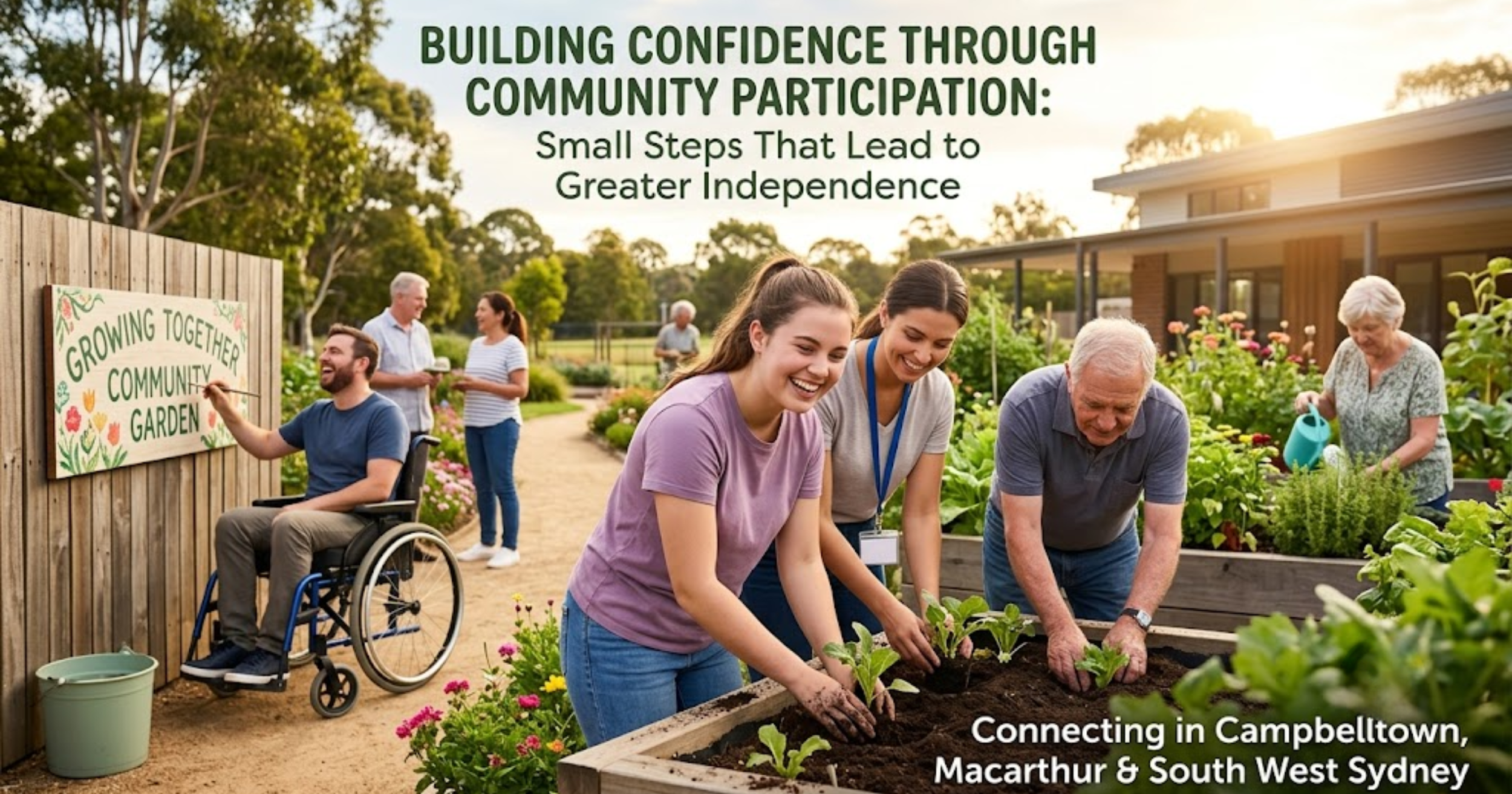
Confidence Is Built, Not Given
Confidence Is Built, Not Given
Most people can remember a time when they felt nervous about trying something new.
Starting a new job.
Joining a group.
Meeting unfamiliar people.
Learning a skill.
Taking the first step is often the hardest part.
Yet confidence rarely appears before action.
More often, confidence develops because of action.
It grows through experiences, successes, setbacks, learning, and persistence.
For many people living with disability, community participation can provide valuable opportunities to build that confidence one step at a time.
Why Confidence Matters
Confidence can influence many aspects of everyday life.
When people feel more confident, they may be more likely to:
Try new experiences
Build relationships
Pursue personal goals
Develop independence
Learn new skills
Participate in their community
Advocate for their needs and preferences
Confidence does not mean never feeling nervous.
It often means being willing to take the next step despite uncertainty.
Community Participation Creates Opportunities for Growth
One of the reasons community participation can be so valuable is that it creates opportunities for people to experience success in different environments.
These experiences may include:
Joining a social group
Attending a community event
Volunteering
Learning a new skill
Participating in sport or recreation
Exploring educational opportunities
Visiting new places
Every positive experience has the potential to contribute to confidence-building.
Small Achievements Often Lead to Bigger Outcomes
Confidence is rarely built through one major event.
More often, it develops through small achievements repeated over time.
For example:
A participant who initially feels nervous about attending a community activity may eventually feel comfortable participating regularly.
Someone who starts by ordering their own coffee may later develop confidence using public transport independently.
A person who joins a hobby group may eventually build friendships and become an active member of their community.
These small milestones often become the foundation for larger goals.
Building Social Confidence
Many community activities involve interacting with others.
For some people, this can feel challenging at first.
However, regular participation can provide opportunities to:
Meet new people
Practice communication skills
Develop friendships
Strengthen social networks
Build a sense of belonging
Feeling connected to others can contribute positively to confidence and overall wellbeing.
Learning Through Real-Life Experiences
Community participation often provides opportunities to develop practical skills in real-world settings.
Examples may include:
Communication Skills
Engaging with others in social and community environments.
Problem Solving
Navigating unfamiliar situations and making decisions.
Travel Skills
Using public transport or navigating local environments.
Time Management
Attending activities, appointments, and commitments.
Decision Making
Making choices about activities, interests, and personal goals.
Developing these skills can contribute to greater independence over time.
Confidence and Independence Often Grow Together
Confidence and independence are closely connected.
When people feel more confident, they may be more willing to:
Take on new responsibilities
Explore new opportunities
Learn additional skills
Participate more actively in their community
Likewise, increased independence often creates further opportunities to build confidence.
This positive cycle can help support personal growth and goal achievement.
The Importance of Meaningful Participation
Not every activity will appeal to every person.
The most effective confidence-building opportunities are often those that align with a participant's:
Interests
Goals
Strengths
Preferences
Aspirations
Someone who enjoys art may gain confidence through creative programs.
Another person may prefer sport, volunteering, gardening, education, or social activities.
Meaningful participation is personal.
What matters most is that the activity feels relevant and enjoyable to the individual.
The Role of Support Networks
Families, support workers, Support Coordinators, and community organisations can all play a role in supporting confidence-building.
Support may involve:
Encouragement
Skill development
Transport assistance
Identifying opportunities
Goal setting
Celebrating achievements
Sometimes simply having someone believe in a person's potential can make a significant difference.
Confidence Doesn't Require Perfection
One of the most important things to remember is that confidence does not require perfection.
Everyone experiences setbacks.
Everyone encounters challenges.
Growth often comes from continuing to participate, learn, and try again.
Progress is not measured by how quickly goals are achieved, but by the willingness to keep moving forward.
Final Thoughts
Confidence is not something that happens overnight.
It is often built through everyday experiences, meaningful relationships, and opportunities to participate in community life.
For many people living with disability, community participation can provide a pathway to greater confidence, independence, connection, and personal growth.
Sometimes a single activity, conversation, or experience can become the starting point for something much bigger.
Because every journey begins with a first step—and confidence often grows with each step that follows.
Frequently Asked Questions (FAQ)
What is community participation under the NDIS?
Community participation generally refers to activities that help individuals engage with their community, develop skills, build relationships, and pursue personal goals.
How can community participation build confidence?
Community participation can provide opportunities to learn new skills, achieve goals, meet new people, and experience success in different environments.
What types of activities support confidence-building?
Activities may include volunteering, social groups, recreation, sport, education, community events, creative pursuits, and supported community access programs.
Does confidence help with independence?
Many people find that increased confidence supports greater independence by encouraging them to try new experiences and develop additional skills.
Is community participation different for everyone?
Yes. Meaningful participation should reflect each individual's interests, goals, strengths, and support needs.
Can support workers assist with community participation?
Support arrangements vary depending on individual circumstances and NDIS funding. Participants should discuss their goals and support needs with their provider or Support Coordinator.
Why are small achievements important?
Small achievements often create momentum, helping people develop confidence gradually while working towards larger goals.
Answer Engine Optimisation (AEO)
How does community participation build confidence?
Community participation can help individuals develop confidence by creating opportunities to learn new skills, meet new people, overcome challenges, and achieve personal goals. Participating in meaningful activities can encourage independence, strengthen social connections, and provide a sense of achievement.
Confidence is often built gradually through positive experiences and repeated opportunities to engage in activities that reflect a person's interests, strengths, and aspirations.
Community participation may include volunteering, recreation, education, employment, social groups, creative activities, and community access programs.
Geographic Optimisation (GEO)
Participants across Campbelltown, Leumeah, Mount Annan, Macarthur, South West Sydney, Wollongong, Port Kembla, and surrounding NSW communities have access to a wide range of community participation opportunities that can support confidence, independence, and inclusion.
Whether through local community groups, recreational activities, volunteer programs, education opportunities, sporting clubs, or supported community access services, meaningful participation can help people build connections and pursue their personal goals within their local community.
