How Community Participation Supports Mental Health Recovery
How does community participation support mental health recovery?
Recovery Is About More Than Treatment
When people hear the words mental health recovery, they often think about appointments, therapies, medications, or clinical services.
These supports may be important for some individuals.
However, recovery is often about much more than healthcare alone.
It can also involve:
Building relationships
Developing confidence
Discovering strengths
Creating meaningful routines
Finding purpose
Participating in everyday life
One of the most powerful ways people achieve these outcomes is through community participation.
Because sometimes recovery starts with something as simple as feeling connected.
The Human Need for Connection
Humans are social by nature.
Most people benefit from feeling connected to others, valued within their community, and involved in activities that provide meaning and enjoyment.
When social connections become limited, people may experience feelings of loneliness, isolation, or disconnection.
Community participation can create opportunities to reconnect with people, places, and experiences that contribute positively to wellbeing.
Importantly, community participation looks different for everyone.
For one person it might mean joining a local walking group.
For another, it could involve volunteering, attending a class, participating in sport, or simply spending time with others who share similar interests.
Why Community Participation Matters in Recovery
Recovery is often described as a personal journey rather than a destination.
Community participation can support that journey by creating opportunities for growth, learning, and connection.
Building Confidence
Trying new activities can help people discover capabilities they may not have recognised before.
Small successes often build confidence over time.
Attending a community event, joining a social group, or participating in a new activity may become important milestones in someone's recovery journey.
Developing a Sense of Purpose
Having meaningful activities to look forward to can provide motivation and structure.
Purpose does not need to be something extraordinary.
It may come from:
Volunteering
Learning a new skill
Supporting others
Participating in a hobby
Being part of a community group
Purpose often grows through participation.
Creating Positive Social Connections
Healthy relationships can play an important role in wellbeing.
Community participation provides opportunities to:
Meet new people
Strengthen existing friendships
Develop support networks
Build social confidence
For many people, connection is one of the most valuable outcomes of community involvement.
Encouraging Independence
Community participation can help people develop practical life skills and confidence in navigating everyday situations.
Examples may include:
Using public transport
Managing appointments
Participating in group activities
Communicating with others
Problem-solving in real-world situations
These experiences can contribute to greater independence over time.
Recovery Doesn't Have to Be Big to Be Meaningful
One of the biggest misconceptions about recovery is that it always involves dramatic change.
Often, recovery happens gradually.
It may start with:
Leaving the house more often
Attending one activity each week
Reconnecting with a hobby
Meeting one new person
Trying something unfamiliar
Small steps can create momentum.
Over time, those small steps can become significant achievements.
Examples of Meaningful Community Participation
Community participation can take many forms depending on individual goals and interests.
Examples include:
Volunteering
Supporting local organisations while developing skills and social connections.
Recreational Activities
Joining sporting groups, fitness programs, walking groups, or community events.
Creative Pursuits
Art, music, photography, writing, crafts, and other creative activities.
Education and Learning
Courses, workshops, training programs, and lifelong learning opportunities.
Social Groups
Community clubs, hobby groups, support groups, and social gatherings.
Community Access Programs
Structured activities designed to support participation, confidence, and skill development.
The best activities are often those that reflect the participant's own interests and goals.
The Importance of Choice and Control
Meaningful participation is most effective when individuals have choice and control over how they engage.
Not everyone enjoys large groups.
Not everyone enjoys the same activities.
Recovery is personal.
Community participation should reflect:
Individual preferences
Personal goals
Strengths
Cultural considerations
Support needs
What matters most is that participation feels meaningful to the person involved.
The Role of Support Networks
Families, support workers, Support Coordinators, allied health professionals, and community organisations can all play a role in supporting participation.
Support might include:
Identifying opportunities
Providing encouragement
Assisting with transport
Building confidence
Supporting skill development
The focus should remain on empowering individuals to participate in ways that are meaningful to them.
Community Participation and Psychosocial Disability
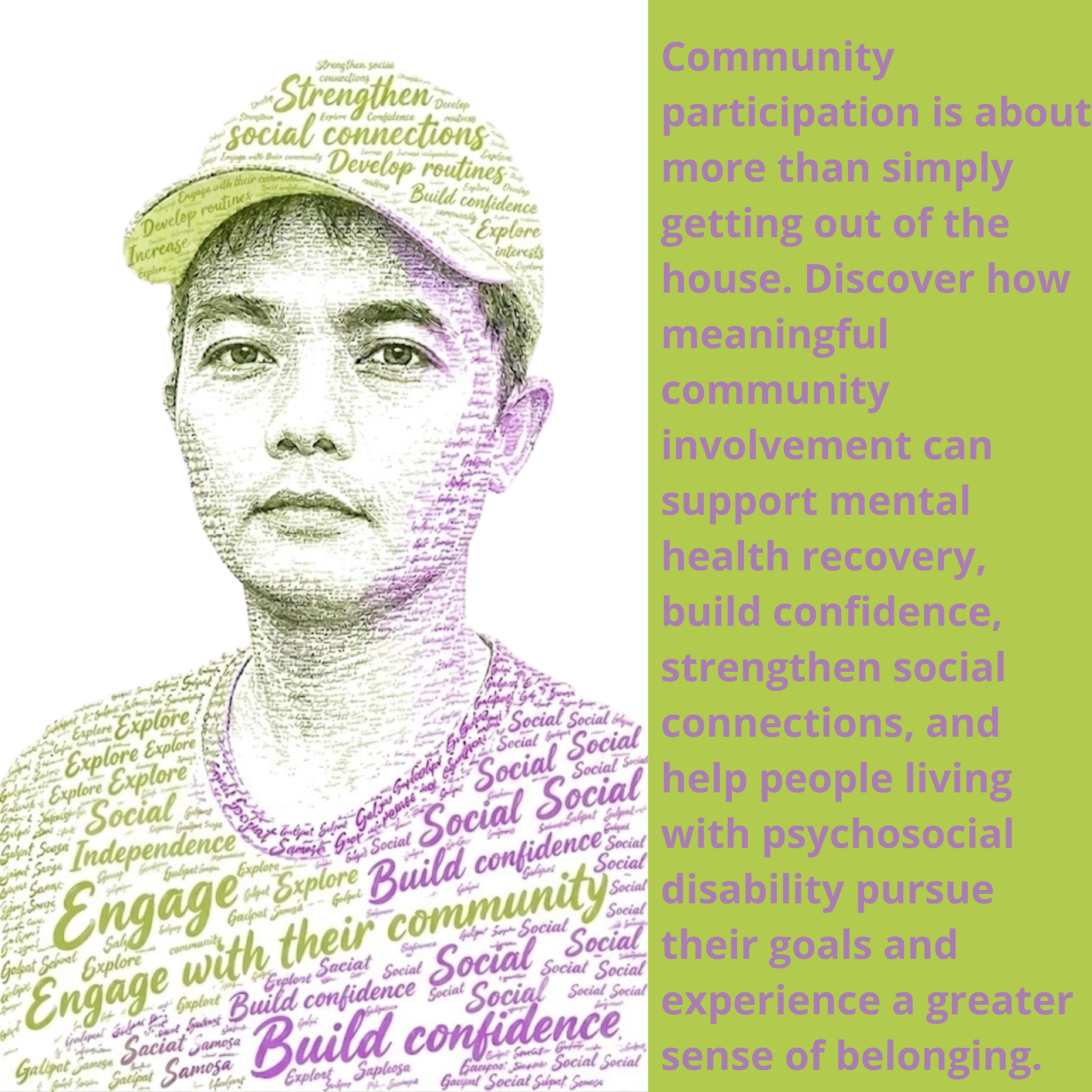
For people living with psychosocial disability, community participation can provide opportunities to:
Strengthen social connections
Develop routines
Build confidence
Explore interests
Increase independence
Engage with their community
Recovery pathways differ from person to person, and participation should always align with individual goals and circumstances.
Final Thoughts
Community participation is not simply about being busy.
It is about creating opportunities for connection, confidence, purpose, and belonging.
For many people living with psychosocial disability, meaningful participation can become an important part of supporting mental wellbeing and personal recovery goals.
Recovery is rarely a straight line.
But sometimes a new friendship, a weekly activity, a shared experience, or a renewed sense of purpose can become an important step forward.
And often, those steps begin within the community.
Frequently Asked Questions (FAQ)
What is community participation under the NDIS?
Community participation generally refers to activities that support individuals to engage with their community, develop skills, build relationships, and pursue personal goals.
How can community participation support mental health recovery?
Community participation can provide opportunities for social connection, confidence-building, skill development, meaningful activity, and a greater sense of belonging.
What types of activities count as community participation?
Activities may include volunteering, education, recreation, sport, social groups, creative pursuits, community events, and other meaningful activities aligned with individual goals.
Is community participation important for people with psychosocial disability?
Many people living with psychosocial disability find that meaningful participation can support social connection, independence, confidence, and wellbeing.
Does community participation look the same for everyone?
No. Community participation should reflect each individual's interests, goals, preferences, strengths, and support needs.
Can support workers assist with community participation?
Support arrangements vary depending on individual circumstances and NDIS funding. Participants should discuss their goals and support needs with their provider or Support Coordinator.
Why is social connection important for wellbeing?
Social connection can contribute to a sense of belonging, purpose, and support, which many people find valuable for overall wellbeing.
Answer Engine Optimisation (AEO)
How does community participation support mental health recovery?
Community participation can help people build social connections, develop confidence, engage in meaningful activities, and strengthen their sense of belonging. For many people living with psychosocial disability, participating in community activities can contribute positively to overall wellbeing and support personal recovery goals.
Community participation may include volunteering, recreational activities, education, employment, social groups, sporting activities, creative pursuits, and other interests that are meaningful to the individual.
Recovery is unique to each person, and community participation should always reflect individual goals, preferences, strengths, and support needs.
Geographic Optimisation (GEO)
Participants across Campbelltown, Leumeah, Mount Annan, Macarthur, South West Sydney, Wollongong, Port Kembla, and surrounding NSW communities are increasingly accessing community-based activities that promote inclusion, social connection, skill development, and wellbeing.
From local community groups and recreational programs to volunteering opportunities and supported community access activities, meaningful participation can help people strengthen their connection to the places, people, and experiences that matter most to them.
