NDIS Consumer Rights Explained:What Participants Should Know Before Choosing Supports
What Every Participant and Family Should Know
What Every Participant and Family Should Know
The National Disability Insurance Scheme (NDIS) helps many Australians with disability access supports that improve independence, wellbeing and community participation.
While the scheme provides funding for supports, it is important to remember that NDIS participants have the same consumer rights as every other Australian when purchasing products or services.
This means that NDIS providers must follow Australian Consumer Law and treat participants fairly, honestly and transparently.
Understanding these rights can help participants and families make safer decisions when choosing supports.
What the NDIS Does
The NDIS provides funding to eligible people living with permanent and significant disability. The aim is to help participants:
live more independently
build skills and confidence
participate in community life
improve overall quality of life
Supports funded through the NDIS may include services, equipment or therapies that align with a participant’s individual goals and support needs.
Businesses or organisations that deliver these supports are known as NDIS providers.
Consumer Protection Still Applies
Even though the NDIS is a government scheme, providers must still comply with Australian Consumer Law.
This means participants have legal rights when buying goods or services. Providers must:
provide services with appropriate skill and care
ensure products are safe and match their description
provide services within a reasonable timeframe
avoid misleading or deceptive behaviour
If these standards are not met, participants may be entitled to repairs, replacements, refunds or other remedies.
Common Consumer Issues in the NDIS
Recent observations across the disability sector have identified several areas where participants may experience difficulties.
Misleading Claims About NDIS Funding
Some businesses incorrectly suggest that their products or services are “NDIS approved” or guaranteed to be funded.
In reality:
there is no automatic NDIS approval for products or services
funding depends on a participant’s individual plan, goals and eligibility
If a participant purchases something that is later deemed not claimable under their plan, they may be left paying the cost themselves.
Participants should always check with their support coordinator, plan manager or the NDIA before making large purchases.
Pressure Sales and Misleading Discounts
Occasionally businesses advertise large “sale” discounts to create urgency.
This can happen when:
a product was never sold at the higher price
the “sale price” has been the normal price for a long time
only a small number of items were sold at the original price
These tactics can make participants feel pressured to buy quickly rather than comparing options.
Taking time to review alternatives and confirm eligibility can help avoid unnecessary spending.
When Supports Don’t Meet Expectations
Consumer guarantees apply to all purchases, including NDIS funded supports.
Participants may encounter issues such as:
equipment arriving faulty or damaged
assistive technology not matching what was ordered
services not delivered with appropriate skill or care
long delays in fixing problems
If this occurs, providers are generally responsible for resolving the issue within a reasonable timeframe.
Being Charged for Supports Not Delivered
Charging for supports that were not actually provided is against consumer law.
This may occur if a provider:
bills for sessions that never took place
charges for equipment that was not supplied
accepts payment for items they cannot deliver in a reasonable timeframe
Participants should always review invoices and ask questions if something seems unclear.
Scams Targeting NDIS Participants
Unfortunately, people living with disability are sometimes targeted by scams.
Common scams include:
Impersonation scams
Fraudsters may pretend to be from government services and attempt to obtain personal information or payments.
Online relationship scams
Scammers may build trust over time and eventually ask for money, gift cards or financial assistance.
Participants, carers and support workers should stay alert to warning signs and report suspicious activity where necessary.

What Every Participant and Family Should Know
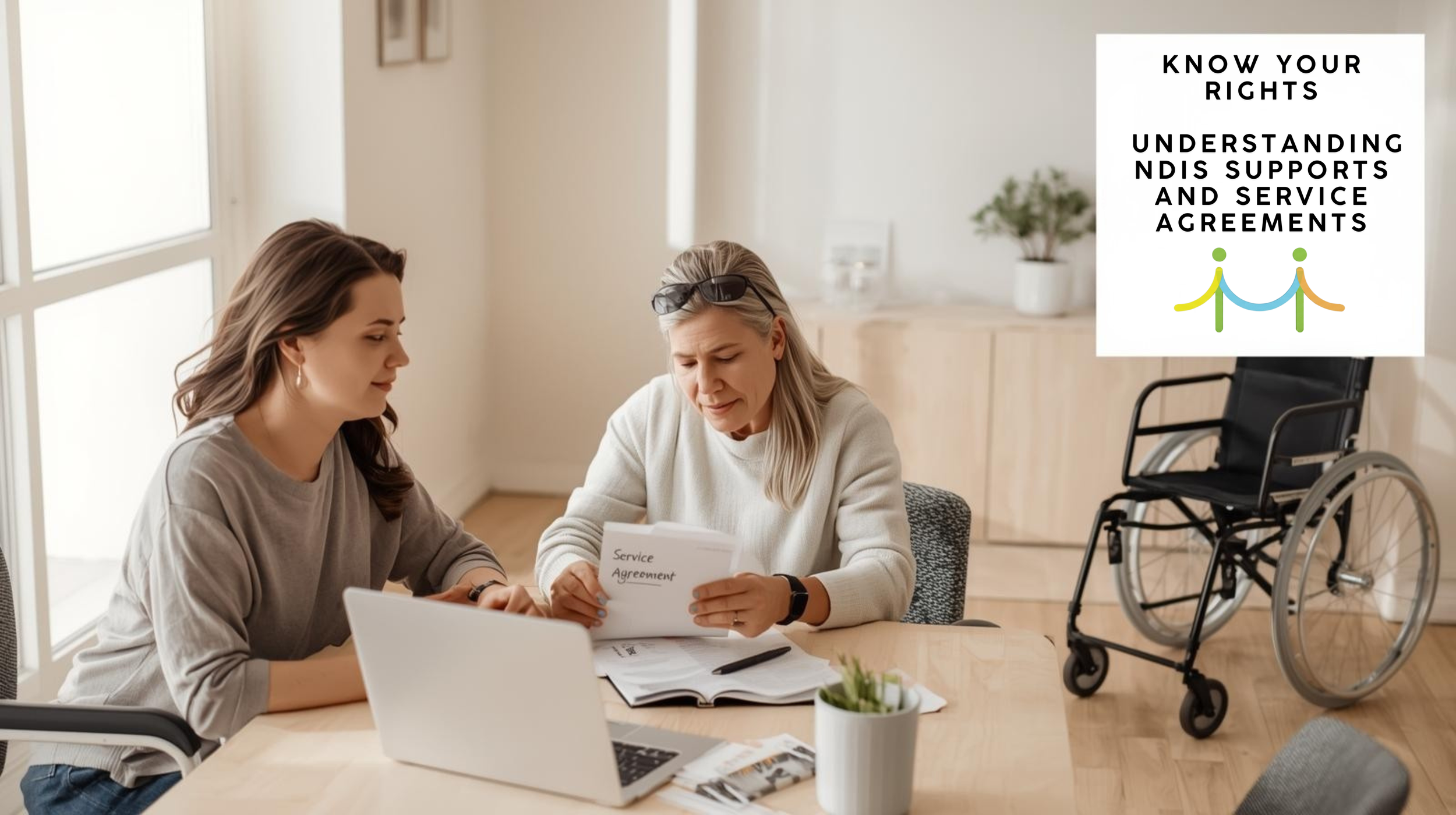
Contracts and Service Agreements
Many NDIS supports are provided under service agreements, which outline the terms of the support relationship.
Having a written agreement can help ensure everyone understands:
what services will be provided
the cost of those services
cancellation terms
responsibilities of both the participant and provider
Participants should never feel pressured to sign an agreement immediately. It is reasonable to take time, ask questions or seek independent advice before agreeing.
What to Check Before Signing a Service Agreement
A clear agreement should include:
the services being delivered
the price and how it is calculated
when supports will be provided
any additional costs
cancellation arrangements
how disputes will be resolved
If something is unclear, participants should ask for an explanation before signing.
Consumer Rights Apply to Everyone
Participants across Australia — including those living in rural, remote and First Nations communities — have the same consumer protections under the law.
Access to clear information and culturally appropriate services remains important so that all participants can make informed decisions about their supports.
What To Do If Something Goes Wrong
If a problem occurs with an NDIS support, the first step is usually to contact the provider directly and explain the concern.
If the issue cannot be resolved, participants may be able to seek assistance from:
state or territory consumer protection agencies
the NDIS Quality and Safeguards Commission
relevant advocacy services
Keeping records of invoices, emails and agreements can make it easier to resolve disputes if they arise.
Supporting Informed Choices
Understanding consumer rights empowers NDIS participants to make confident decisions about their supports.
Taking the time to:
compare providers
ask questions
review agreements carefully
seek independent advice
can help ensure supports are safe, appropriate and aligned with a participant’s goals.
A Note From Bridges Alliance
At Bridges Alliance, we believe informed participants are empowered participants. Our team encourages individuals and families to ask questions, understand their rights and make decisions that support long-term wellbeing.
This article is provided for general information only and should not be considered legal advice.
