What Participants, Families & Providers Need to Know. Strong evidence can make a significant difference when navigating the NDIS.
Strong evidence can make a significant difference when navigating the NDIS.
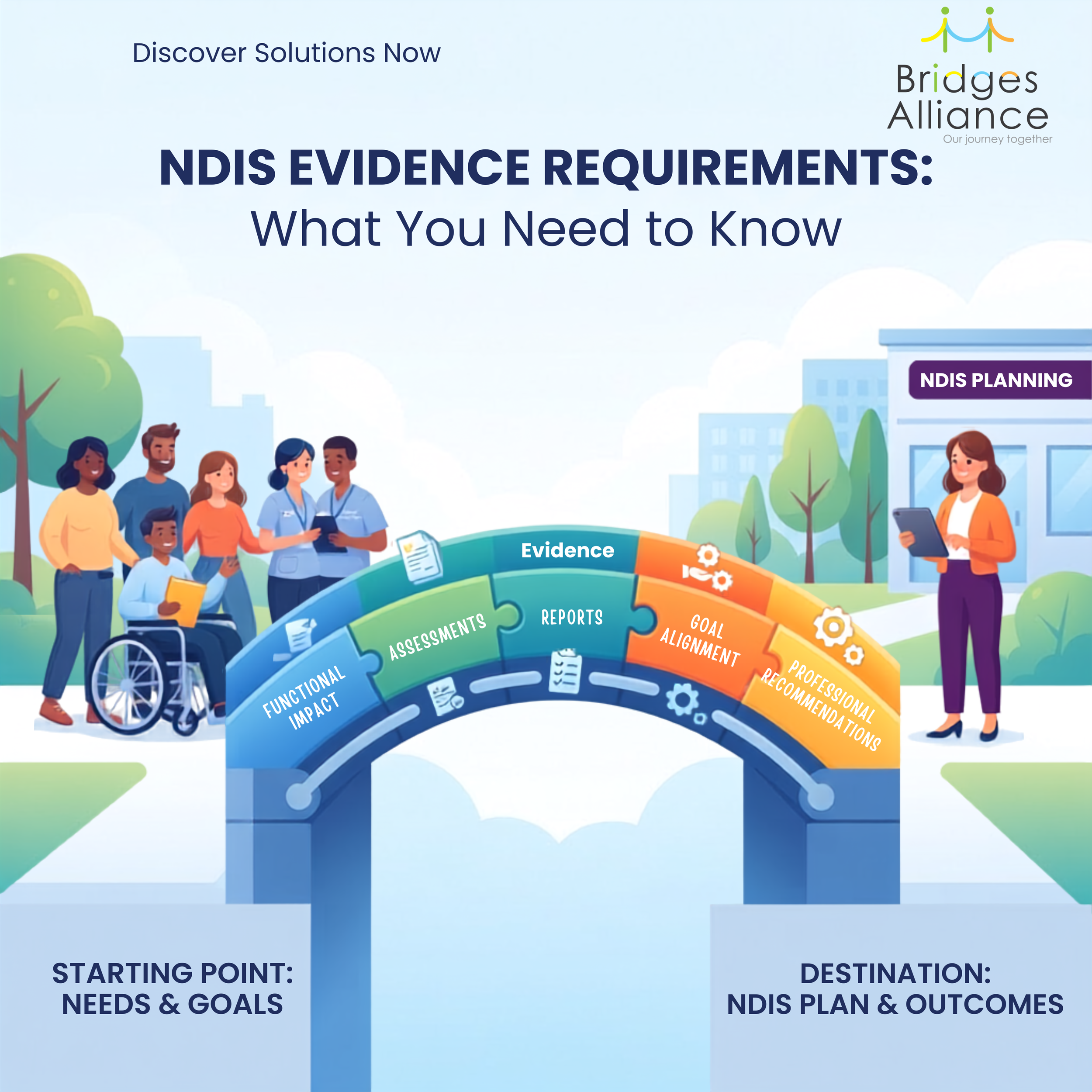
The NDIS is placing greater emphasis on evidence that clearly demonstrates not only a person's diagnosis, but also how their disability impacts everyday life, independence, participation, communication, mobility and self-management. Evidence should be recent, specific to the participant and completed by the most appropriate treating health professional.
For participants and families, this means:
✅ Providing up-to-date reports and assessments
✅ Demonstrating functional impact, not just diagnosis
✅ Including information about previous treatments and outcomes
✅ Clearly outlining ongoing support needs and goals
For providers and allied health professionals, quality documentation matters. Progress reports, functional assessments and evidence-based recommendations help create a clearer picture of the participant's support requirements and future planning needs.
One of the most common challenges in the NDIS is not a lack of need—it is a lack of evidence that clearly connects a participant's disability to the supports being requested.
Whether you're preparing for access, a plan reassessment, a change in circumstances or a funding review, investing time in gathering comprehensive evidence can help ensure participant needs are accurately understood and considered.
At Bridges Alliance, we regularly work alongside participants, families, Support Coordinators and allied health professionals to help ensure the right information is available to support informed planning conversations.
#NDIS #DisabilitySupport #SupportCoordination #NDISParticipants #FunctionalCapacityAssessment #AlliedHealth #NDISPlanning #EvidenceBasedPractice #DisabilityAdvocacy #BridgesAlliance
Frequently Asked Questions (FAQ): NDIS Evidence Requirements
1. What type of evidence is most important for the NDIS?
The NDIS places a primary focus on evidence demonstrating functional impact rather than just a medical diagnosis. This means documentation should clearly show how a person's disability affects their everyday life, independence, communication, mobility, self-care, and self-management.
2. Who should complete NDIS reports and assessments?
Evidence should ideally be recent, specific to the participant, and completed by the most appropriate treating health professional (such as an Occupational Therapist, Speech Pathologist, Physiologist, or psychologist) who understands their day-to-day support requirements.
3. When do I need to provide new evidence?
You should gather and submit comprehensive documentation when:
Applying for initial NDIS access.
Preparing for a plan reassessment or check-in.
Experiencing a change in circumstances that requires different or increased supports.
Going through a funding review.
4. What is a Functional Capacity Assessment (FCA), and why is it needed?
A Functional Capacity Assessment (FCA) is an objective evaluation—usually conducted by an Occupational Therapist—that measures a participant's capabilities and limitations across standard domains (like mobility, communication, and social interaction). It provides structured evidence to help planners determine if requested supports meet the "reasonable and necessary" criteria.
5. Why are my requested supports being questioned or denied?
One of the most common challenges in the NDIS is a lack of clear connection between a participant's functional disability limitations and the specific supports being requested. Vague statements or clinical opinions without daily life examples can lead to delays or reduced funding.
6. How does Bridges Alliance help with NDIS evidence?
At Bridges Alliance, we work alongside participants, families, Support Coordinators, and allied health professionals. We help ensure that all documentation, functional assessments, and progress reports are thoroughly organized to support informed, confident planning conversations.
Do you have more questions about preparing your evidence or navigating your NDIS plan? Get in touch with the Bridges Alliance team today.
AEO (Answer Engine Optimization) Text
Optimized for featured snippets (approx. 50-60 words). Provides a direct, concise answer.
Strong evidence is crucial for navigating the NDIS successfully. The NDIS places significant emphasis on documentation that clearly demonstrates how a person's disability impacts their everyday life, independence, and self-management, rather than focusing solely on the diagnosis. This requires recent, specific reports and assessments from treating health professionals, functional capacity assessments, and clear outlines of ongoing support needs and goals to ensure your plan accurately reflects your requirements.
GEO Text (Targeting Audience)
Optimized for local search. (Replace "[Your Service Area]" with specific regions if applicable, otherwise keep it national.
Serving participants across Australia (or [Your Service Area]), Bridges Alliance works alongside individuals, families, Support Coordinators, and allied health professionals to ensure the right information is gathered. Whether preparing for access, a plan reassessment, or a funding review, we help navigate NDIS evidence requirements to support informed planning conversations and successful outcomes.
