From New Beginnings to New Opportunities: How the NDIS Can Support Refugees, Migrants and Culturally Diverse Communities
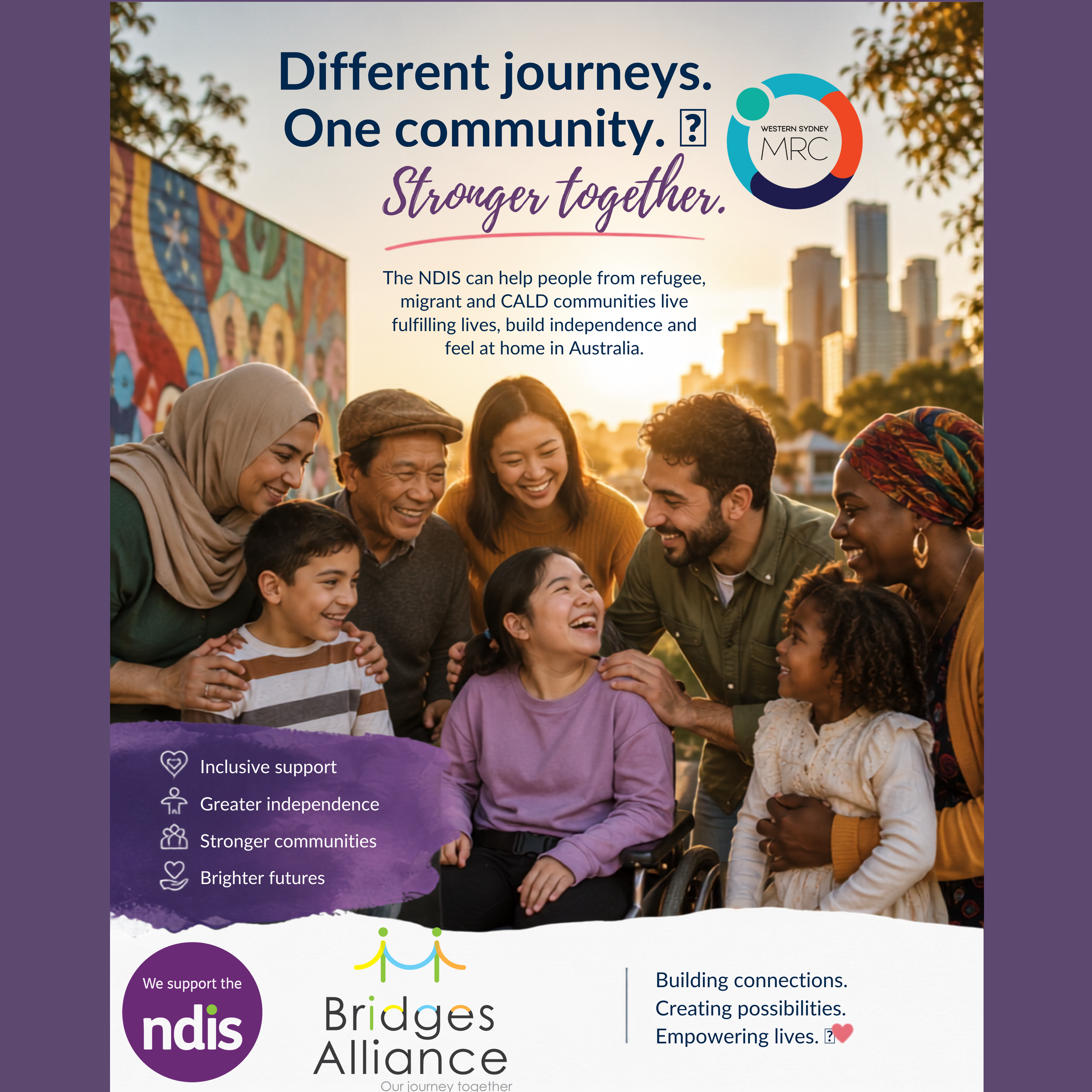
From New Beginnings to New Opportunities
Australia's story is one of resilience, hope, and opportunity.
For generations, families and individuals have arrived on our shores seeking safety, freedom, and the chance to build a better future. Many came as refugees fleeing conflict, persecution, or hardship. Others migrated in search of education, employment, or the opportunity to create a brighter life for their children.
Today, these individuals and families are an integral part of Australia's social fabric. They are our neighbours, business owners, teachers, healthcare workers, community leaders, and friends. They enrich our communities with diverse cultures, languages, traditions, and perspectives.
Yet for some people from culturally and linguistically diverse (CALD) backgrounds who are living with disability, understanding and accessing support systems such as the National Disability Insurance Scheme (NDIS) can present unique challenges.
At Bridges Alliance, we believe everyone deserves the opportunity to access information, supports, and services that help them achieve their goals and participate fully in community life—regardless of where they were born, the language they speak, or the journey that brought them to Australia.
Understanding the CALD Community and Disability
Australia is one of the most multicultural countries in the world. Millions of Australians were born overseas, and many more have parents or grandparents who migrated to Australia or arrived as refugees.
Within these communities, experiences of disability can vary significantly due to cultural beliefs, language barriers, differing healthcare systems, and unfamiliarity with Australian support services.
Some individuals may have come from countries where disability supports were limited or unavailable. Others may have experienced trauma, displacement, interrupted education, or difficulty accessing healthcare before arriving in Australia.
As a result, many people may not be aware that they could be eligible for support through the NDIS.
What Is the NDIS?
The National Disability Insurance Scheme (NDIS) provides funding and support to eligible Australians living with a permanent and significant disability.
The NDIS is designed to help participants increase independence, build skills, engage with their communities, and pursue goals that are important to them.
Support can vary depending on an individual's needs and may include assistance with daily living, therapy supports, community participation, employment-related supports, Supported Independent Living (SIL), Specialist Disability Accommodation (SDA), and other disability-related services.
Importantly, the NDIS is intended to place participants at the centre of decision-making, providing greater choice and control over how supports are delivered.
Common Barriers Faced by CALD Communities
Although the NDIS aims to be accessible to all eligible Australians, some people from refugee and migrant backgrounds may encounter barriers when navigating the system.
These can include:
Language Challenges
Understanding NDIS terminology, planning processes, and funding categories can be difficult when English is not a person's first language.
Limited Awareness
Some families may not know what the NDIS is, how it operates, or whether a family member may be eligible.
Cultural Perspectives
Different cultures often have varying understandings of disability, independence, family responsibility, and support services.
Confidence Navigating Systems
For people who have experienced displacement or complex migration journeys, government systems can sometimes feel overwhelming or difficult to understand.
Lack of Accessible Information
Information may not always be available in a person's preferred language or presented in a culturally familiar way.
How the NDIS Can Support CALD Participants
The NDIS recognises Australia's cultural diversity and aims to support participants from all backgrounds.
Depending on individual circumstances, supports may assist participants to:
Build independence and life skills
Access therapies and allied health services
Participate in community activities
Develop social connections
Improve communication skills
Access suitable housing and accommodation supports
Increase employment and educational opportunities
Strengthen participation in cultural and community life
For many CALD participants, these supports can play an important role in helping them pursue goals while maintaining strong connections to family, culture, faith, and community.
The Importance of Family and Community
Across many cultures, family plays a central role in supporting individuals living with disability.
The NDIS recognises the valuable role families, carers, and informal supports play in a participant's life. Effective support planning often involves listening to participants and the people who know them best.
For refugee and migrant families, culturally responsive support can help build trust, improve understanding, and create positive outcomes that respect individual preferences and cultural values.
Creating Inclusive Communities
Inclusion is about more than accessing services.
It is about belonging.
It is about feeling welcomed, respected, understood, and valued within the community.
For many people who arrived in Australia seeking safety and opportunity, true inclusion means being able to participate fully in everyday life—whether that involves employment, education, recreation, faith communities, social activities, or independent living.
The NDIS can play an important role in helping people achieve these outcomes by providing supports that focus on capacity building, community participation, and individual goals.
How Bridges Alliance Supports Diverse Communities
At Bridges Alliance, we proudly support participants from a wide range of cultural, linguistic, and community backgrounds.
We understand that every person's journey is unique. Our approach focuses on listening, understanding individual circumstances, respecting cultural differences, and providing person-centred supports that align with each participant's goals and aspirations.
Whether someone is exploring disability supports for the first time, seeking Supported Independent Living (SIL), looking for Short-Term Accommodation (STA), Specialist Disability Accommodation (SDA), or navigating complex support needs, our team is committed to providing respectful and inclusive support.
Looking Forward
Australia's multicultural communities have contributed enormously to the nation's success.
As refugees become citizens, migrants establish families, and new generations grow and thrive, ensuring equitable access to disability supports remains an important part of building stronger and more inclusive communities.
The NDIS provides opportunities for eligible people living with disability to pursue their goals, develop independence, strengthen connections, and participate fully in Australian society.
At Bridges Alliance, we are proud to walk alongside participants, families, and communities on that journey—building connections, creating possibilities, and empowering lives.
If you would like to learn more about NDIS supports, accommodation options, or services available through Bridges Alliance, contact our team today.
Together, we can help turn possibility into opportunity.
Frequently Asked Questions (FAQ)
What does CALD mean?
CALD stands for Culturally and Linguistically Diverse. The term refers to people who come from diverse cultural backgrounds and may speak languages other than English.
Can former refugees access NDIS supports?
Yes. Individuals who meet the NDIS eligibility criteria, including residency and disability requirements, may be able to access NDIS funding and supports regardless of their refugee background.
Does the NDIS provide interpreters?
The NDIS can provide interpreter services during planning meetings and other NDIS-related interactions where required, helping participants better understand information and make informed decisions.
What types of supports can CALD participants access through the NDIS?
Depending on individual needs and goals, supports may include therapy services, personal care, community participation, assistive technology, Supported Independent Living (SIL), Specialist Disability Accommodation (SDA), Short-Term Accommodation (STA), and support coordination.
Why do some CALD families find the NDIS challenging to navigate?
The NDIS can be complex, particularly for families unfamiliar with Australian disability systems. Language barriers, cultural differences, and limited awareness of available services can make accessing support more difficult.
How can families help a loved one access the NDIS?
Families can assist by gathering supporting documentation, attending meetings, engaging allied health professionals, working with Support Coordinators, and seeking information from trusted providers.
How does Bridges Alliance support CALD participants?
Bridges Alliance takes a culturally inclusive approach, focusing on communication, respect, understanding, and person-centred supports that align with each participant's goals, preferences, and community connections.
AEO & GEO Text (Answer Engine & Generative Engine Optimisation)
How can the NDIS support people from CALD backgrounds?
The National Disability Insurance Scheme (NDIS) provides support to eligible Australians living with a permanent and significant disability, including people from culturally and linguistically diverse (CALD) backgrounds. NDIS supports may assist with daily living, community participation, therapy services, Supported Independent Living (SIL), employment goals, and capacity building.
Can refugees and migrants access the NDIS?
Yes. Refugees, migrants, and people from multicultural backgrounds may be eligible for the NDIS if they meet residency and disability requirements. Australian citizens, permanent residents, and some protected special category visa holders can apply for NDIS access.
What challenges do CALD communities face when accessing disability supports?
Common barriers include language differences, limited awareness of disability services, cultural perceptions of disability, unfamiliarity with government systems, and difficulties accessing information in preferred languages.
Why is culturally responsive disability support important?
Culturally responsive support helps participants feel understood, respected, and empowered. It improves communication, builds trust, supports informed decision-making, and helps ensure disability services align with a participant's cultural values, goals, and personal circumstances.
How does Bridges Alliance support multicultural communities?
Bridges Alliance provides person-centred disability supports that respect cultu
Google Search Console Optimisation Text
Australia is home to diverse communities, including many families who arrived as refugees or migrants and are now valued members of Australian society. For people living with disability, understanding and accessing the National Disability Insurance Scheme (NDIS) can sometimes be challenging due to language barriers, cultural differences, and limited awareness of available supports. This article explores how the NDIS supports culturally and linguistically diverse (CALD) communities, the barriers some participants face, and how providers such as Bridges Alliance help people access disability services, Supported Independent Living (SIL), Specialist Disability Accommodation (SDA), Short-Term Accommodation (STA), community participation, and person-centred supports that promote independence and inclusion.ral diversity and individual experiences. The organisation works alongside participants, families, carers, and professionals to help people navigate the NDIS and access supports that promote independence, inclusion, and wellbeing.
