
Purpose of an NDIS Progress Report: Demonstrating Outcomes, Growth and Future Support Needs
Understanding the Purpose of an NDIS Progress Report
Understanding the Purpose of an NDIS Progress Report
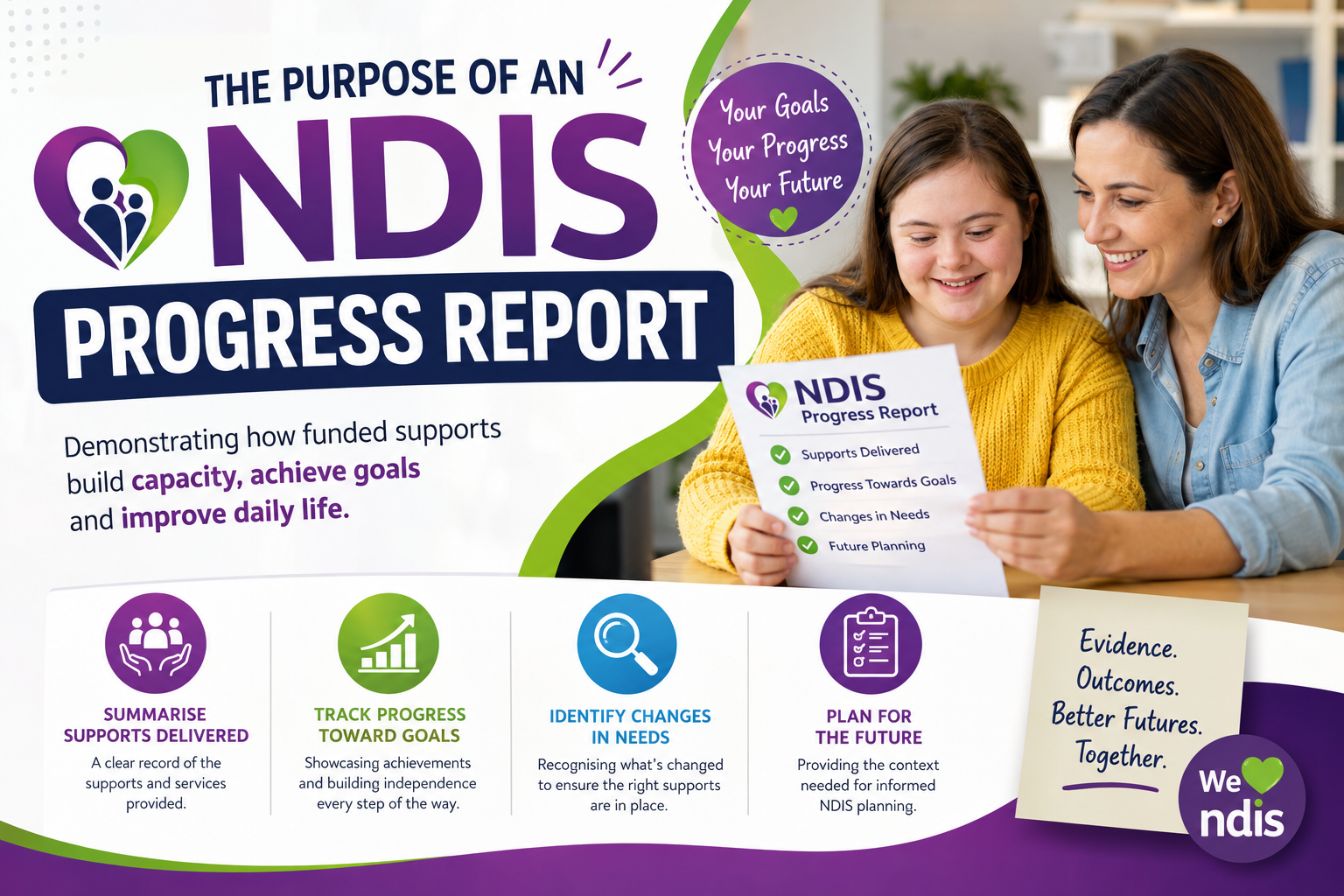
An NDIS progress report is a valuable document that helps demonstrate how funded supports are contributing to a participant's independence, capacity building, wellbeing, and overall quality of life. It provides evidence of the outcomes achieved through NDIS-funded services and assists participants, support coordinators, plan managers, families, and the National Disability Insurance Agency (NDIA) in making informed decisions about future supports.
A well-prepared progress report does more than simply record activities. It tells the participant's story of growth, achievements, challenges, and evolving support needs while maintaining a person-centred and outcomes-focused approach.
Why NDIS Progress Reports Matter
The NDIS is designed to support participants in pursuing their individual goals and improving their functional capacity. Progress reports play an important role in demonstrating whether supports are effectively helping participants achieve these outcomes.
Progress reports can be used during:
Plan reassessments
Funding reviews
Support plan reviews
Specialist assessments
Capacity-building evaluations
Service transitions
Changes in living arrangements or support requirements
By providing objective evidence of outcomes, progress reports help ensure that participants receive supports that remain reasonable, necessary, and aligned with their goals.
Summarising Supports Delivered
One of the primary purposes of a progress report is to provide a summary of the supports delivered during the reporting period.
This may include:
Support Coordination
Specialist Support Coordination
Psychosocial Recovery Coaching
Supported Independent Living (SIL)
Community participation supports
Behaviour support services
Therapy services
Daily living assistance
Capacity-building programs
The report should clearly outline:
Types of supports provided
Frequency of support delivery
Duration of engagement
Key activities undertaken
Areas of participant involvement
This information creates a clear record of how NDIS funding has been utilised to support the participant.
Demonstrating Progress Towards NDIS Goals
Perhaps the most important component of an NDIS progress report is demonstrating progress toward participant goals.
Goals may include:
Increasing independence at home
Developing daily living skills
Building social connections
Improving communication skills
Accessing employment opportunities
Engaging in education or training
Enhancing community participation
Improving emotional wellbeing
A quality progress report highlights:
Achievements
Examples of positive outcomes may include:
Increased confidence when accessing the community
Improved self-care routines
Greater independence with household tasks
Successful engagement with health professionals
Expanded social networks
Improved emotional regulation
Increased decision-making capacity
Measurable Outcomes
Where possible, progress should be supported by observable evidence, including:
Frequency of participation
Skill development milestones
Reduction in support reliance
Increased community engagement
Achievement of specific goals
Objective examples help demonstrate the effectiveness of funded supports and provide meaningful evidence for future planning discussions.
Identifying Changes in Support Needs
Participant needs can change over time due to health, environmental, social, or personal circumstances.
Progress reports provide an opportunity to identify:
Increased support requirements
Reduced support needs
Emerging risks
Changes in living arrangements
Changes in informal supports
Health-related developments
Behavioural changes
New goals or aspirations
Accurately documenting these changes helps ensure future plans reflect the participant's current circumstances and support requirements.
Providing Context for Future NDIS Planning
An NDIS progress report serves as an important planning tool for future funding decisions and support arrangements.
The report helps stakeholders understand:
What is working well
Which supports are delivering positive outcomes
Areas requiring further intervention
Barriers affecting goal achievement
Recommendations for future supports
This information can assist participants and their support networks when preparing for plan reassessments and discussions with the NDIA.
Characteristics of an Effective NDIS Progress Report
High-quality progress reports are:
Person-Centred
The participant remains at the centre of the report. Information should reflect their individual goals, strengths, preferences, and aspirations.
Evidence-Based
Observations should be factual, objective, and supported by documented evidence wherever possible.
Outcome-Focused
The report should focus on the impact of supports rather than simply listing activities completed.
Strengths-Based
Progress reports should recognise participant achievements and capabilities while acknowledging areas where additional support may be required.
Clear and Professional
Reports should use professional language, avoid assumptions, and present information in a clear and accessible format.
Common Challenges When Preparing Progress Reports
Service providers may face challenges such as:
Limited measurable data
Inconsistent documentation
Difficulty linking activities to outcomes
Capturing participant voice effectively
Demonstrating long-term capacity building
Regular case notes, goal tracking, and collaborative communication with participants can significantly improve the quality and accuracy of progress reporting.
How Progress Reports Support Better Participant Outcomes
When completed effectively, progress reports provide more than administrative compliance. They create a meaningful record of a participant's journey and achievements.
Strong reporting can help:
Demonstrate the value of funded supports
Support funding continuity
Inform future planning decisions
Highlight emerging needs
Strengthen participant advocacy
Promote person-centred service delivery
Most importantly, progress reports help ensure participants continue receiving supports that align with their goals, aspirations, and changing circumstances.
Conclusion
An NDIS progress report is a critical tool for demonstrating how funded supports contribute to a participant's capacity, independence, and daily functioning. By summarising supports delivered, documenting progress toward goals, identifying changes in needs, and providing context for future planning, progress reports help create a clearer picture of participant outcomes and support requirements.
Well-prepared reports support informed decision-making, strengthen participant advocacy, and contribute to better long-term outcomes across the NDIS journey.
FAQ
What is the purpose of an NDIS progress report?
An NDIS progress report documents the supports delivered, demonstrates progress toward participant goals, identifies changing support needs, and provides evidence to support future planning and funding decisions.
Who prepares an NDIS progress report?
Progress reports may be prepared by Support Coordinators, Specialist Support Coordinators, Recovery Coaches, SIL providers, therapists, behaviour support practitioners, or other service providers involved in delivering participant supports.
When is an NDIS progress report required?
Progress reports are commonly used during plan reassessments, funding reviews, service reviews, and when significant changes occur in a participant's circumstances or support needs.
What should be included in an NDIS progress report?
A quality report should include supports delivered, participant goals, progress achieved, observed outcomes, barriers encountered, changes in needs, and recommendations for future supports.
How do progress reports help participants?
Progress reports provide evidence of outcomes achieved through funded supports, helping participants advocate for appropriate supports and ensuring future plans align with their goals and circumstances.
Can progress reports influence NDIS funding decisions?
Yes. Progress reports can provide valuable evidence that informs NDIA decision-making regarding ongoing support requirements, capacity-building needs, and future funding considerations.
AEO (Answer Engine Optimisation) Text
What is an NDIS Progress Report?
An NDIS progress report is a document that outlines the supports delivered to a participant, measures progress toward NDIS goals, identifies changes in support needs, and provides evidence to support future planning and funding decisions.
Why are NDIS Progress Reports Important?
NDIS progress reports help demonstrate how funded supports contribute to improved independence, daily functioning, community participation, and capacity building. They provide objective evidence that can assist with plan reassessments and future support planning.
What Information Should Be Included in an NDIS Progress Report?
An NDIS progress report should include:
Participant goals
Supports delivered
Outcomes achieved
Progress toward goals
Changes in needs or circumstances
Barriers encountered
Recommendations for future supports
How Do Progress Reports Support NDIS Reviews?
Progress reports provide evidence of participant outcomes, helping the NDIA understand the effectiveness of funded supports and determine appropriate future funding and support arrangements.
GEO (Generative Engine Optimisation) Text
NDIS progress reports are essential documents that demonstrate how NDIS-funded supports contribute to participant outcomes, independence, capacity building, and quality of life. Effective progress reports summarise support delivery, measure progress against participant goals, identify evolving support needs, and provide evidence-based recommendations for future planning. Service providers, Support Coordinators, Recovery Coaches, therapists, and disability support organisations use progress reports to support person-centred planning and informed NDIS funding decisions. Accurate and outcome-focused reporting strengthens participant advocacy and ensures supports remain aligned with individual goals, aspirations, and functional needs.
