What High Physical Support SDA Really Looks Like
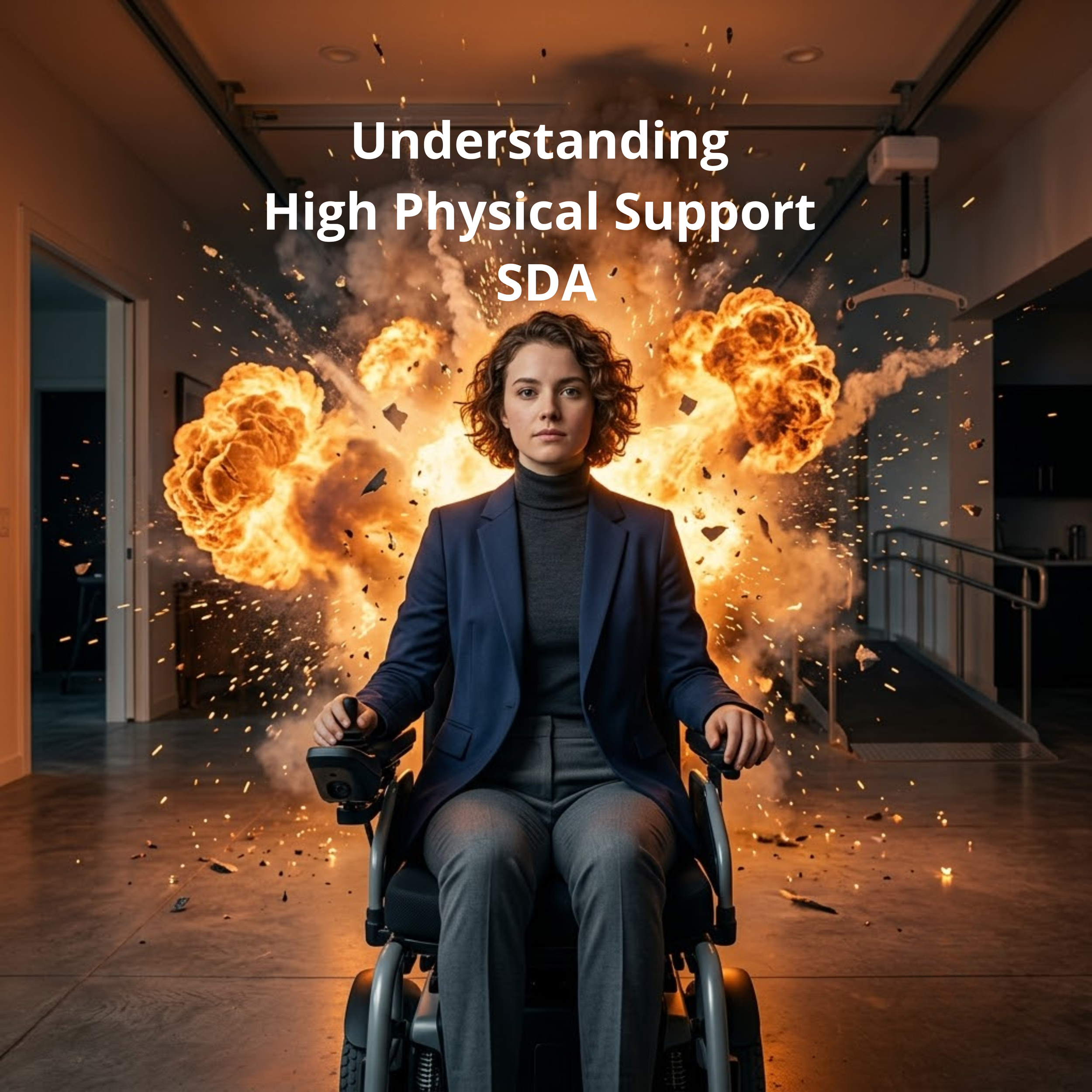
Understanding High Physical Support SDA
When people hear the term "High Physical Support SDA," they often picture a clinical setting that feels more like a hospital than a home.
The reality is very different.
Modern High Physical Support Specialist Disability Accommodation (SDA) is designed to create safe, accessible, and comfortable living environments that support independence, dignity, and quality of life.
For many participants, High Physical Support SDA provides the physical environment needed to maximise choice, control, and participation in everyday life.
But what does it actually look like?
Let's explore what families and participants can expect.
Understanding High Physical Support SDA
High Physical Support is one of the design categories within Specialist Disability Accommodation (SDA).
It is intended for a small number of NDIS participants who have significant physical support needs and require specialised housing features that are unlikely to be found in mainstream accommodation.
The purpose of High Physical Support SDA is not simply to provide accommodation—it is to provide an environment that enables participants to live more safely, comfortably, and independently.
It's Designed To Feel Like a Home
One of the biggest misconceptions about SDA is that it resembles a healthcare facility.
Modern SDA developments are typically designed as contemporary homes or apartments that prioritise:
Comfort
Privacy
Accessibility
Independence
Community inclusion
Participants often have their own private bedroom and ensuite while sharing common living areas depending on the housing arrangement.
The focus is on creating a genuine home environment that supports individual lifestyles and personal preferences.
Accessibility Is Built Into Every Space
Accessibility is one of the defining features of High Physical Support SDA.
Depending on the design, homes may include:
Step-free access
Wide hallways and doorways
Accessible kitchens
Wheelchair-friendly layouts
Height-adjustable features
Accessible outdoor areas
Spacious living environments
These features can help participants navigate their home more independently and safely.
Assistive Technology Often Plays a Key Role
Technology is increasingly integrated into High Physical Support SDA.
Examples may include:
Automated doors
Smart home controls
Voice-activated systems
Environmental control technology
Accessible intercom systems
Emergency communication systems
The specific technology available varies between properties and participant needs.
The goal is to support independence wherever possible.
Ceiling Hoist Provision and Structural Supports
Many High Physical Support SDA properties are designed with structural features that support the use of assistive equipment.
Depending on individual needs and housing design, this may include:
Ceiling hoist provision
Reinforced ceilings
Additional power capacity
Equipment charging areas
Accessible storage solutions
These features can help support safe transfers and daily living activities.
Accessible Bathrooms Designed for Function and Dignity
Bathrooms are often one of the most important areas within High Physical Support SDA.
Design features may include:
Roll-in showers
Accessible sinks
Spacious layouts
Support rails
Assistive equipment compatibility
Slip-resistant surfaces
The aim is to support both independence and safety while preserving dignity and privacy.
Emergency Backup Systems
Many High Physical Support SDA homes incorporate features designed to improve safety during unexpected situations.
Depending on the property, this may include:
Backup power systems
Emergency communication systems
Accessible safety features
Redundancies for critical equipment
These features can be particularly important for participants who rely on assistive technology or specialised equipment.
Location Matters Too
A well-designed SDA home is about more than the building itself.
Many participants value living close to:
Family and friends
Medical services
Public transport
Shopping centres
Employment opportunities
Community activities
Location can play a significant role in supporting social inclusion and community participation.
What Families Often Notice Most
Families visiting a High Physical Support SDA property for the first time are often surprised by how modern, welcoming, and home-like the environment feels.
While specialised design features are important, many families find themselves focusing on something else entirely:
The opportunities for greater independence.
Participants may be able to:
Exercise more choice and control.
Access their environment more easily.
Build confidence in daily living activities.
Participate more actively in their community.
Develop routines that support personal goals.
Questions to Ask During an SDA Property Visit
When viewing a High Physical Support SDA property, consider asking:
What accessibility features are included?
What assistive technology is available?
How are emergency situations managed?
What support arrangements are available?
How is participant choice supported?
What community access opportunities are nearby?
Can the property accommodate future support needs?
Final Thoughts
High Physical Support SDA is about much more than specialised housing design.
At its best, it provides an environment that supports accessibility, independence, dignity, and quality of life.
Every participant's needs, goals, and preferences are unique, which is why understanding the features and purpose of High Physical Support SDA is an important step when exploring housing options under the NDIS.
For many participants, the right environment can help create opportunities for greater independence and participation in everyday life.
Frequently Asked Questions (FAQ)
What is High Physical Support SDA?
High Physical Support SDA is a category of Specialist Disability Accommodation designed for NDIS participants with significant physical support needs who require specialised housing features.
Who may be eligible for High Physical Support SDA?
Eligibility is determined by the NDIS based on individual circumstances, functional impairment, support needs, and housing requirements.
Does SDA funding include support workers?
Generally, SDA funding relates to the housing itself. Support services are typically funded separately through other NDIS supports where appropriate.
What accessibility features are commonly included?
Features may include step-free access, wider doorways, accessible bathrooms, assistive technology integration, and provision for specialised equipment.
Can participants personalise their SDA home?
This depends on the property and tenancy arrangements. Participants should discuss available options with the housing provider.
Is High Physical Support SDA available in shared and individual living arrangements?
Different SDA models exist, including apartments, villas, and shared housing arrangements, depending on availability and participant needs.
AEO & GEO Text
Answer Engine Optimisation (AEO)
High Physical Support Specialist Disability Accommodation (SDA) is housing designed for NDIS participants with very high support needs who require specialised design features to improve accessibility, safety, and independence.
Common features of High Physical Support SDA may include wheelchair accessibility, ceiling hoist provision, assistive technology integration, accessible bathrooms, emergency backup power, wider doorways, and improved accessibility throughout the home.
High Physical Support SDA funding is determined by the NDIS based on an individual's functional impairment and housing needs.
Geographic Optimisation (GEO)
Participants and families searching for High Physical Support SDA in Campbelltown, Leumeah, Mount Annan, Macarthur, Wollongong, South West Sydney and surrounding NSW regions are often looking for accessible housing that supports independence while remaining close to family, healthcare services, transport, employment opportunities, and community participation.
Understanding what High Physical Support SDA actually looks like can help participants make informed housing decisions and better understand available accommodation options in their local area.
