
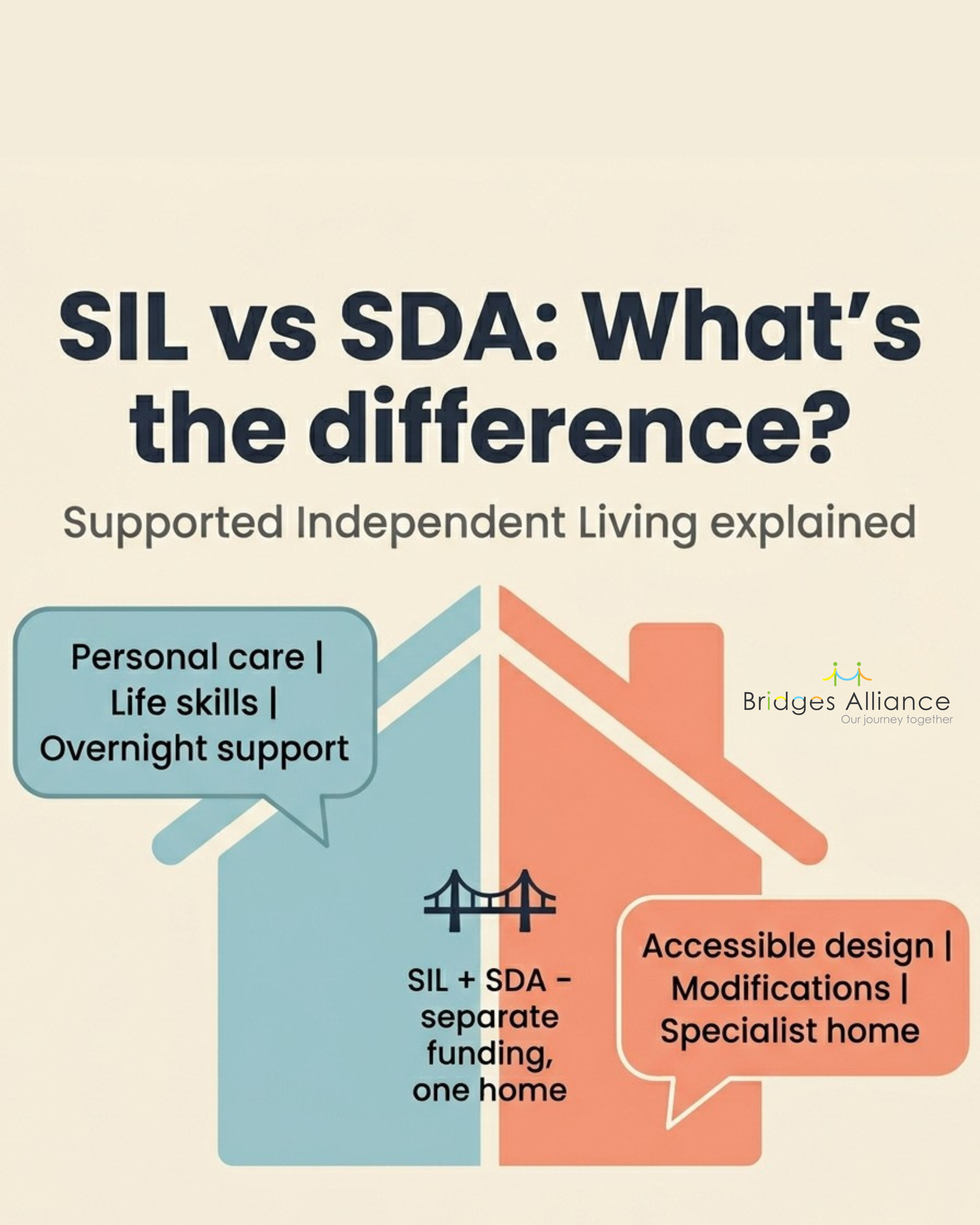
How Does SIL Funding Work? A Clear Guide to Supported Independent Living
Common Myths About SIL
Myth 1: SIL pays for the house.
Fact: SIL pays for supports. The property itself is funded separately (e.g., through SDA, private rental, or home ownership).
Myth 2: You can’t have SIL if you don’t have SDA.
Fact: SIL can be delivered in any suitable home—public housing, private rental, family home, or SDA.
Myth 3: SIL means you lose control over your life.
Fact: SIL is designed to increase independence. A good provider works with you, not over you, building skills and confidence.
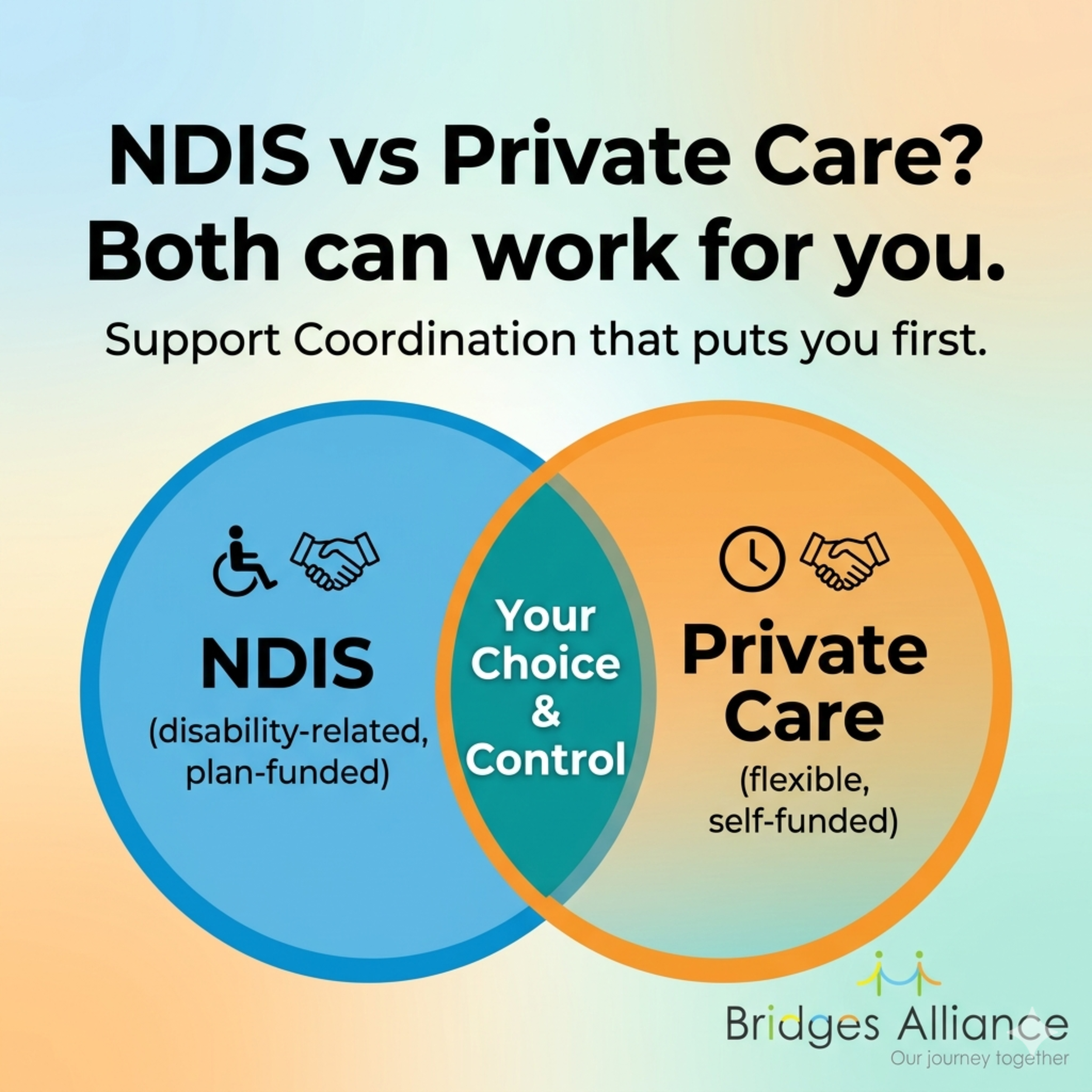
NDIS vs private care – do you have to choose?
How can Bridges Alliance help me navigate NDIS and private care options?
Bridges Alliance Support Coordinators work with you to understand your NDIS budget, identify where NDIS funding applies, and explore private options where they offer better flexibility or fill gaps. We ensure your choices are informed, compliant, and aligned with your goals.
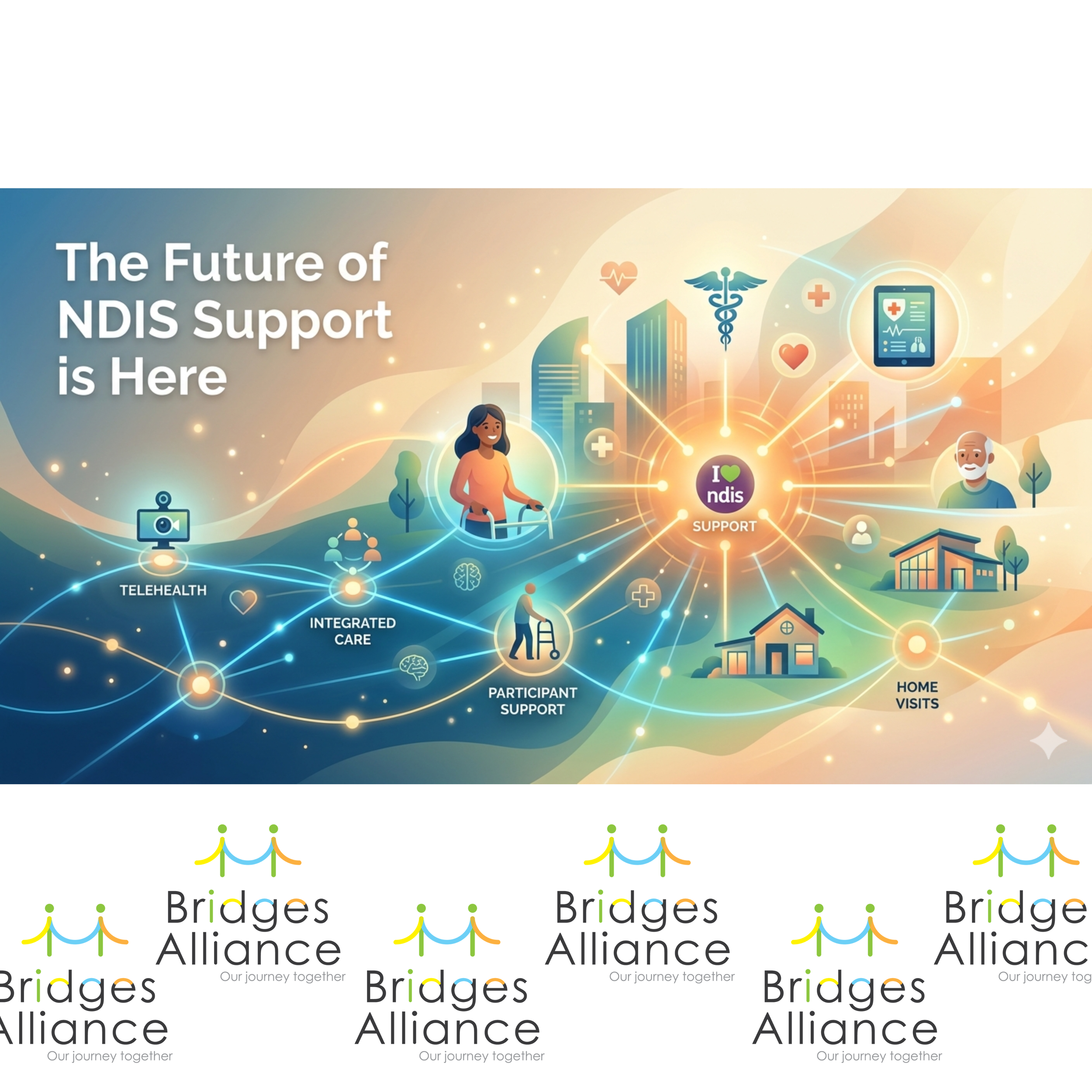
Bridging Access. Empowering Independence.How Bridges Alliance and NEOstream are redefining support in the NDIS space
FAQ SECTION
What is NEOstream in the NDIS context?
NEOstream is a physiotherapy provider delivering telehealth and mobile services that align with NDIS capacity building supports.
How does Bridges Alliance support NDIS participants?
Bridges Alliance provides tailored, participant-centred supports that align with individual NDIS plans, promoting independence and goal achievement.
Can physiotherapy be delivered via telehealth under the NDIS?
Yes, telehealth physiotherapy is an accepted service delivery model when it is reasonable, necessary, and aligned with participant goals.
What are the benefits of mobile physiotherapy?
Mobile physiotherapy allows participants to receive supports in their home or community, improving accessibility and comfort.
How does this partnership benefit participants?
It increases flexibility, improves access to therapy, and supports better long-term outcomes through consistent and personalised care.
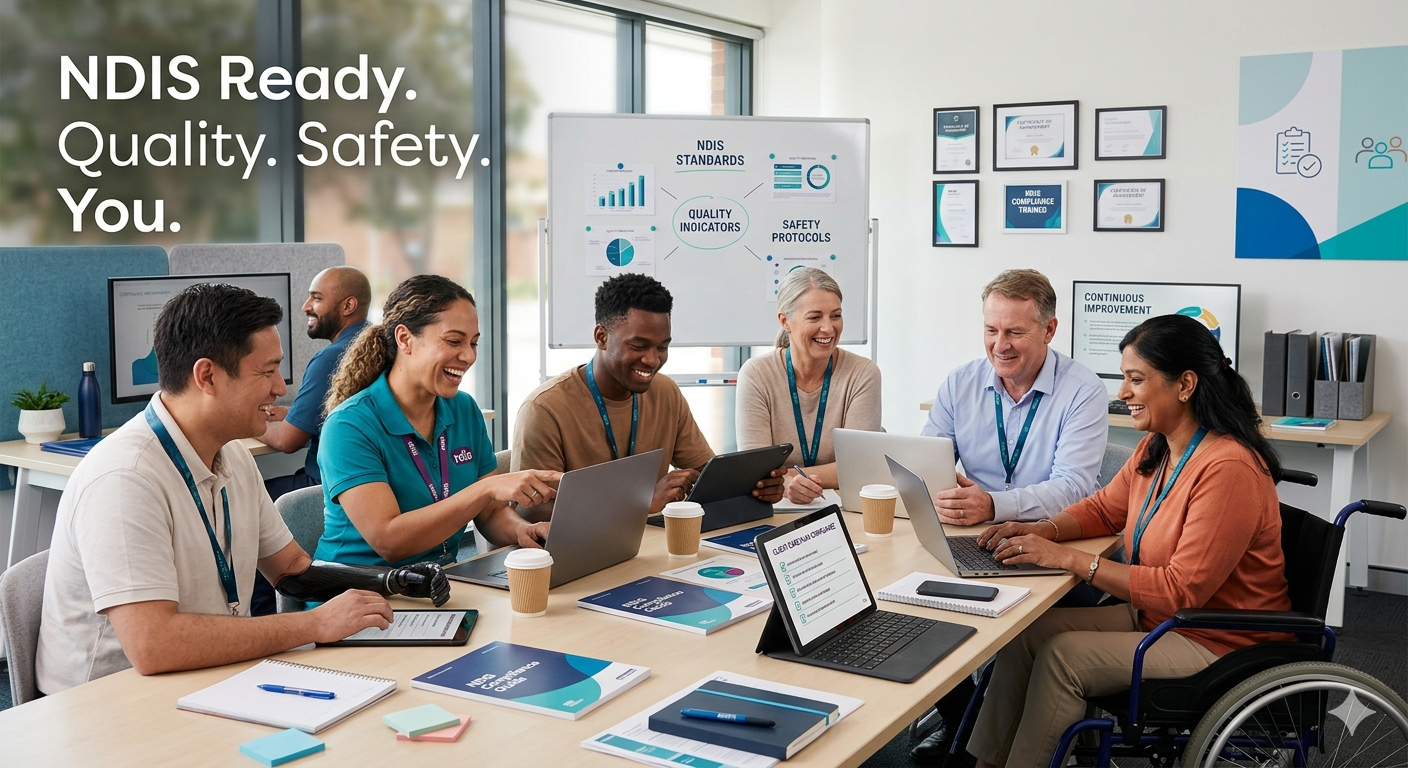
Building Safer, Stronger Supports: Why the NDIS Worker Orientation Module Matters — and How Bridges Alliance Leads the Way
Starting Your NDIS Journey the Right Way
Whether you are entering the sector for the first time or continuing your professional journey, completing the NDIS Worker Orientation Module is an important step.
It signals a shared commitment—to quality, to safety, and most importantly, to the people at the heart of the NDIS.
And with providers like Bridges Alliance leading by example, participants and families can feel confident they are supported by workers who understand what truly matters.

Sam’s Story: Building Independence, One Day at a Time
What stands out most about Sam is not a single milestone, but the consistency of his progress. From preparing for his day, attending appointments, going for walks, helping around the home, or simply choosing how to spend his time—Sam is actively shaping his life.

🧠 The core issue: a $50B system stuck between two worlds
Australia’s $50 billion NDIS is facing a growing divide between the health and disability sectors. Discover how cost-shifting, hospital delays, and funding disputes are impacting participants, providers, and outcomes across the system.

From Respite to Renewal: Joshua’s Journey Toward Confidence, Connection, and Choice
Joshua, a 36-year-old NDIS participant, has significantly improved his independence, confidence, and quality of life through tailored supports including respite, community access, and support coordination with Bridges Alliance. His journey highlights how consistent, person-centred supports can empower individuals to build life skills, engage in the community, and achieve meaningful outcomes under the National Disability Insurance Scheme.
We’re Not For Everyone — And That’s The Point
The Line in the Sand
We’re not here to be chosen by everyone.
We’re here to be chosen by the right ones—
the ones who value what this actually takes.
Because the strongest connections aren’t built on agreement.
They’re built on recognition.

Things People Don’t Say About the NDIS… But Feel Every Day
What should I do if I feel stuck or overwhelmed?
Start simple:
Write down what’s confusing
Talk to someone you trust
Reach out to a provider who will actually listen
You don’t have to figure it all out alone.
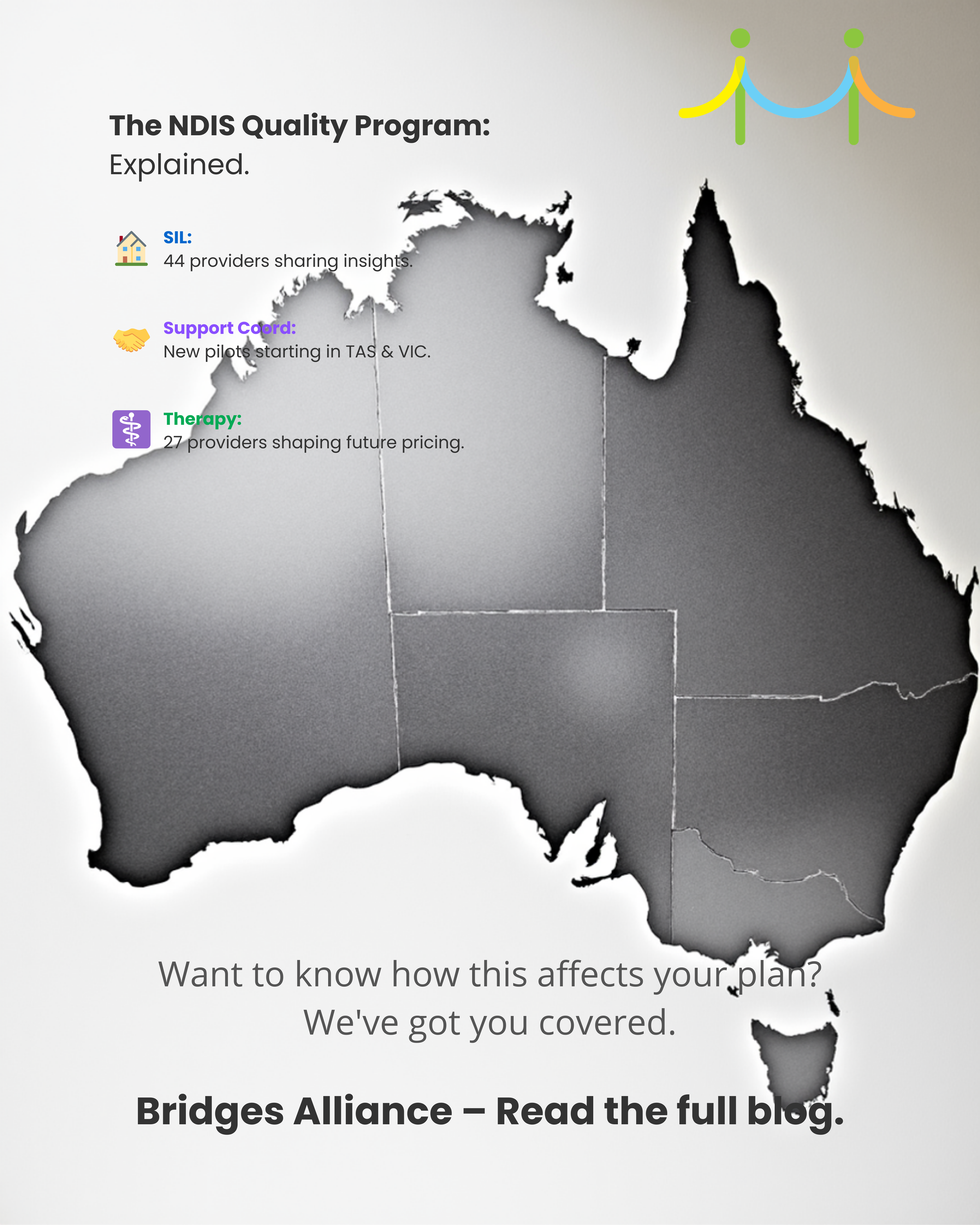
NDIS Quality Supports Program: What It Means for You
Page Summary:
The NDIA’s $45 million Quality Supports Program is underway, running three key pilots for Supported Independent Living (SIL), Therapy, and Support Coordination. This blog from Bridges Alliance breaks down the official NDIS information into plain, easy-to-understand English. Learn about the 44 SIL providers, 27 Therapy providers, and the Support Coordination pilots in Tasmania and Victoria, and discover how these trials will shape future NDIS pricing and quality standards . Bridges Alliance, a registered NDIS provider in NSW, explains what these changes mean for participants and families .

Step-by-Step: What Happens at an NDIS Plan Review?
What Happens if You Disagree with the New Plan?
Sometimes, despite your best efforts, the new plan might miss the mark. If the funding doesn't match your family member's needs, you have rights.
You can request an internal review of the decision. This must be done within three months of receiving the plan. The NDIA will assign a different person to look at the case again . If that doesn't resolve it, you can escalate to the Administrative Review Tribunal .

NDIS 1:1 Support in Sydney: Built Around the Person, Not the System
Precision Matching: More Than Just Availability
At Bridges Alliance, we don’t assign support workers based on availability alone.
We carefully match based on:
Personality compatibility
Values and energy alignment
Relevant experience and skillset
Ability to build trust and consistency
Because when the match is right, outcomes improve — and participants thrive.
How to Write Evidence for an NDIS Plan Review
Final Thoughts
Strong evidence helps ensure the NDIS has a clear picture of the supports that assist a participant in everyday life.
For providers, the key is simple:
Document what you observe
Link supports to participant goals
Provide clear examples of outcomes and needs
By keeping reports factual, relevant and participant-focused, providers can help ensure that NDIS planners have the information they need to make informed decisions.
Can NDIS Funding Pay for Transport? A Simple Guide for Participants (2026)
Not Sure What Transport Support You Can Access?
Every NDIS plan is different, and transport supports can vary depending on individual circumstances.
If you would like to understand what transport supports may be available in your plan, the team at Bridges Alliance is always happy to help.
We can work with you, your family and your support coordinator to make sure you are getting the most from your plan and accessing supports that help you live life your way.

When the Safety Net Snaps: What to Do If Your NDIS Provider Closes Suddenly
When an NDIS provider closes suddenly, the panic is real—but your funding is safe. It belongs to you, not the provider. This step-by-step guide walks you through securing your documents, contacting the NDIA, and finding a stable, long-term partner who won't leave you stranded. Your rights, your next steps, and how to rebuild trust.
Changing Your NDIS Plan: What You Need to Know
Can I change my NDIS plan before it ends?
Yes. If your circumstances change, you can request a plan variation or reassessment through the NDIA.
What is the difference between a plan variation and reassessment?
A variation changes part of your plan, while a reassessment reviews the entire plan and may create a new one.
How long does an NDIS plan change take?
Timeframes vary depending on the complexity of the request and the evidence provided.
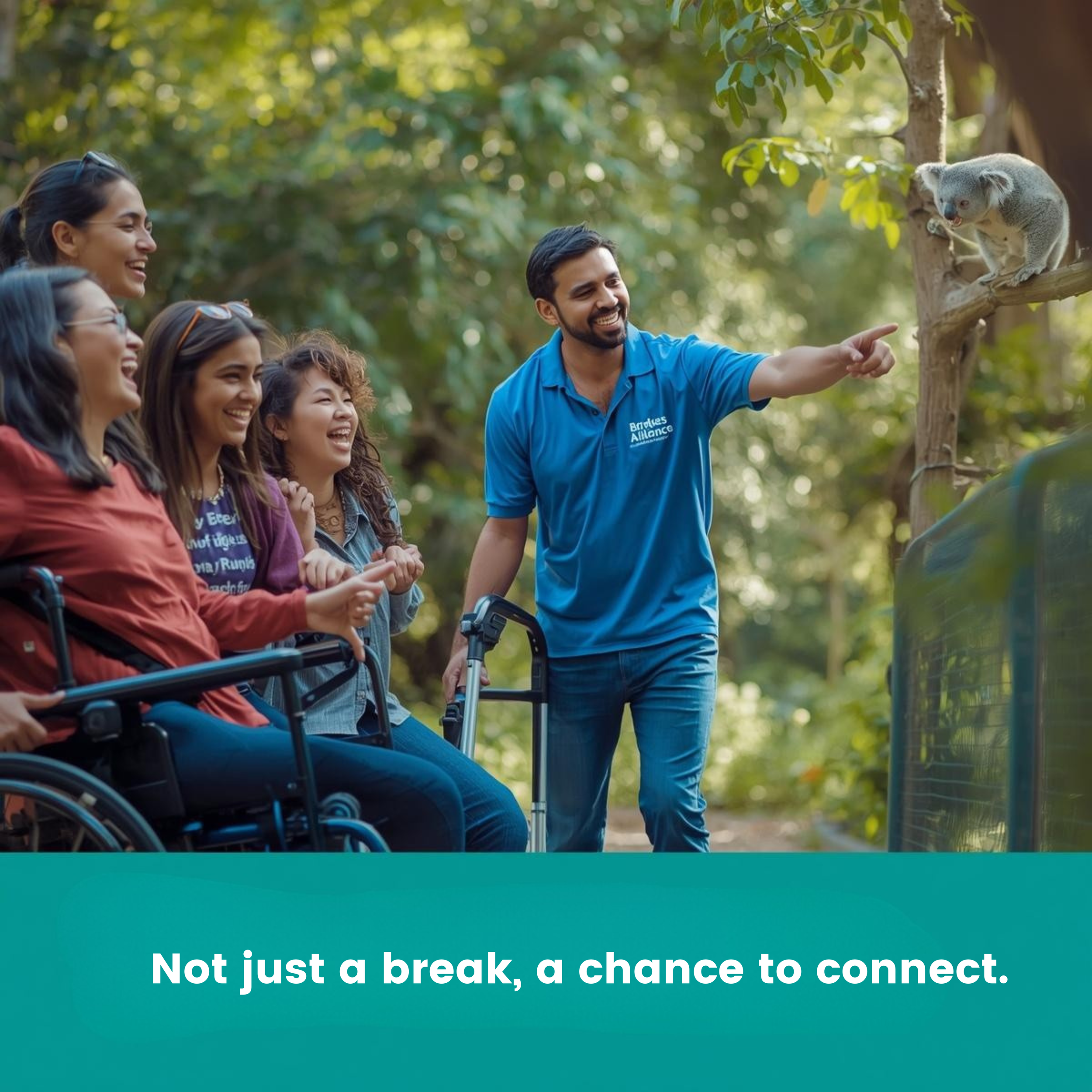
How Long Can NDIS Respite Really Last? Your 2026 Guide to STR Limits
Types of Respite: Where Will You Spend Your 28 Days?
Not all respite is created equal. Depending on your funding and goals, you can choose:
In-Home Respite: A support worker comes to you. Great for maintaining routine.
Community Respite: Day trips, camps, and social outings.
Short-Term Accommodation (Residential): This is where we shine. An overnight stay in a dedicated, accessible home away from home .

Who Can Get SIL Housing? A Simple Guide (2026 Update)
Your Family Can’t Do It All
The NDIS knows families are amazing. But if your parents or siblings are exhausted, getting older, or just can’t provide the level of care you need, SIL can step in. The funding pays for professional workers so your family can just be family.
What Does an NDIS Provider Do? Your Guide to Finding the Right Support
The Core Role of an NDIS Provider
An NDIS provider is responsible for delivering the specific supports outlined in a participant's plan. This can range from help around the house to complex therapeutic care. However, the role is governed by a strict set of rules designed to protect participants

The Three Pillars of Your NDIS Plan
Your NDIS Plan, Your Future
Your NDIS plan is more than just a budget—it's your passport to a more independent, connected, and empowered life. By understanding the three support pillars, you can start to see the possibilities.
And when you're ready to turn those possibilities into reality, we're here to walk beside you.
Ready to make your NDIS plan work for you? Let's have a conversation about your goals.
📞 Phone: 1300 771 063
📧 Email: infoandreferrals@bridgesalliance.com.au
💻 Website: bridgesalliance.com.au
📍 Head Office: Level 2, 178-180 Queen St, Campbelltown NSW 2560